
Both chambered in .223 Remington and 5.56mm, both semi-automatic, both aimed at broadly the same buyer, the Ruger Mini-14 and the AR-15 have spent more than five decades as the two default answers to “what semi-auto rifle should I buy,” built around almost opposite engineering philosophies. [1], [2]
Two Very Different Birth Stories
The AR-15 traces back to Eugene Stoner’s 1956 ArmaLite AR-10, scaled down into the AR-15 by 1958 and sold to Colt in 1959. The Mini-14 arrived later, in 1973, designed by L. James Sullivan, who had worked on the original AR-15 at ArmaLite, together with Ruger himself. [1], [2]
Direct Impingement vs. Fixed Piston
The AR-15’s direct-impingement gas system routes propellant gas directly into the bolt carrier group to cycle the action, while the Mini-14 uses a self-cleaning fixed-piston gas system drawn mechanically from the M1 Garand, a difference that shapes how each rifle runs dirty and how each gets cleaned. [1], [2]
.jpg)
One Receiver, or Two
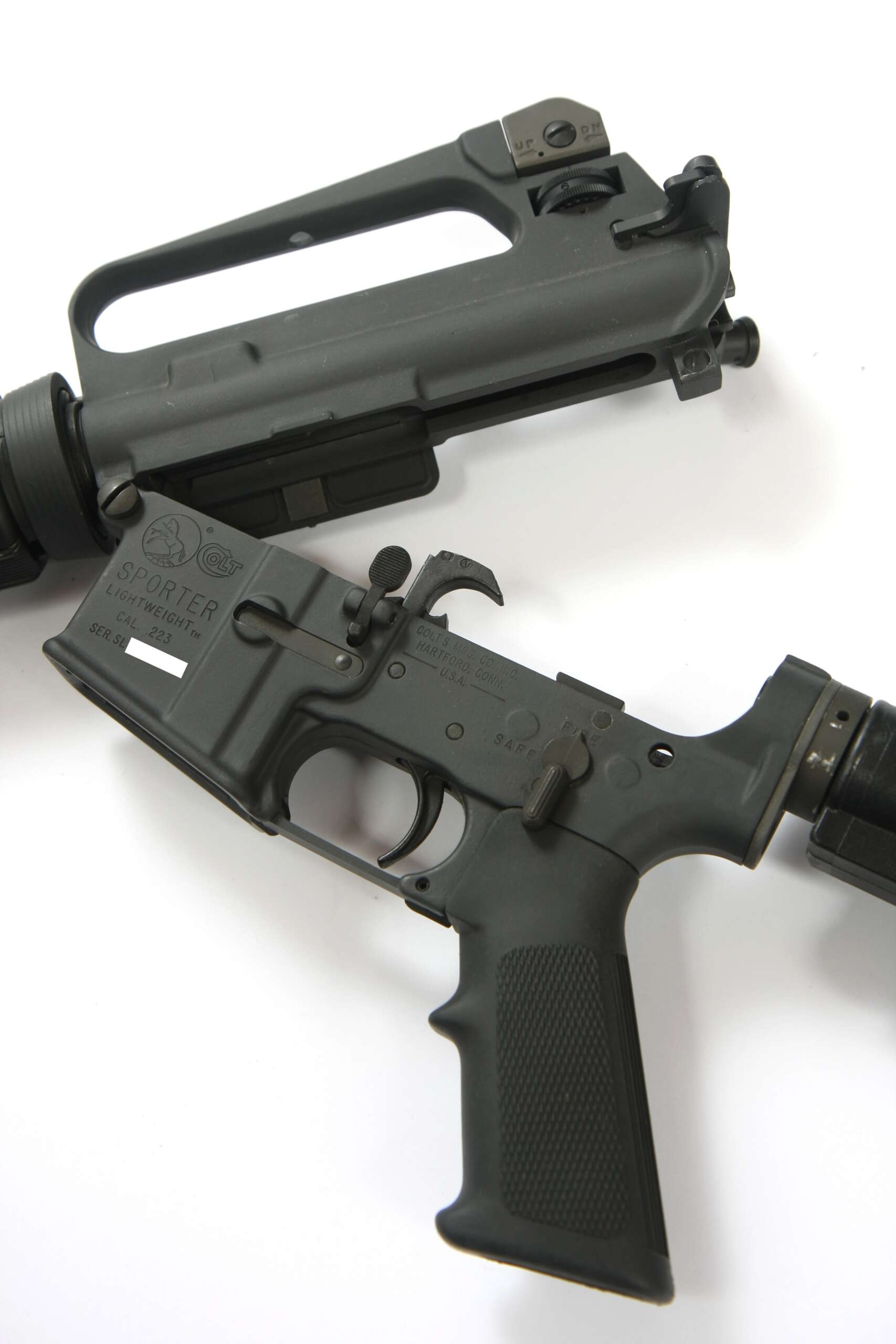
The AR-15 splits into separate upper and lower receivers that can be mixed, matched and swapped independently, letting owners change calibers or configurations without a gunsmith. The Mini-14 uses a single traditional receiver much closer to a conventional hunting rifle’s construction. [1], [2]
| Feature | AR-15 | Ruger Mini-14 |
|---|---|---|
| Origin [2], [1] | ArmaLite, sold to Colt (1959) | Sturm, Ruger & Co. |
| Commercial introduction [2], [1] | AR-15: 1959 (Colt) | 1973 |
| Gas system [2], [1] | Direct impingement | Fixed piston (Garand-derived) |
| Receiver design [2], [1] | Separate upper/lower, modular | Single conventional receiver |
| Primary calibers [2], [1] | .223 Rem. / 5.56x45mm NATO | .223 Rem. / 5.56x45mm NATO (also .300 BLK, 7.62x39mm) |
| Est. U.S. circulation (2024) [2] | 28+ million (AR-15-style rifles) | Not separately tracked; far smaller |
| Military relative [2], [1] | M16 / M4 (shared parts) | AC-556 (selective-fire, discontinued 1999) |
Patents That Opened the Floodgates
Most of Colt’s original AR-15 patents expired in 1977, opening the design to any manufacturer willing to build one, a major reason dozens of companies now sell AR-15-pattern rifles while the Mini-14 has remained almost exclusively a single-manufacturer Ruger product. [2]
A Rifle That Doesn’t Look Like a Rifle, Politically
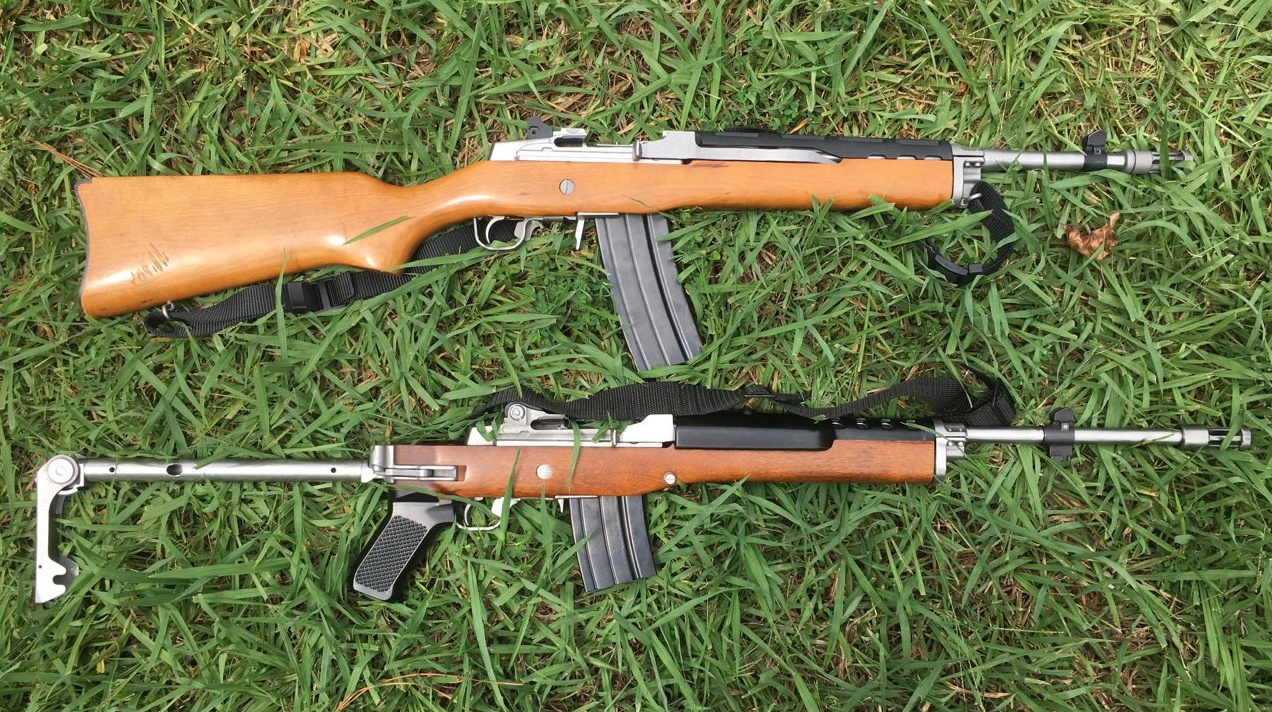
Much of the Mini-14’s enduring appeal has little to do with mechanics: its traditional wood-and-steel silhouette reads as a hunting rifle rather than a military pattern rifle, a distinction that mattered directly under the 1994-2004 federal assault weapons ban, which targeted rifles by listed cosmetic features the AR-15 commonly had and the Mini-14 largely didn’t. [2]

The Numbers Tell a Lopsided Story
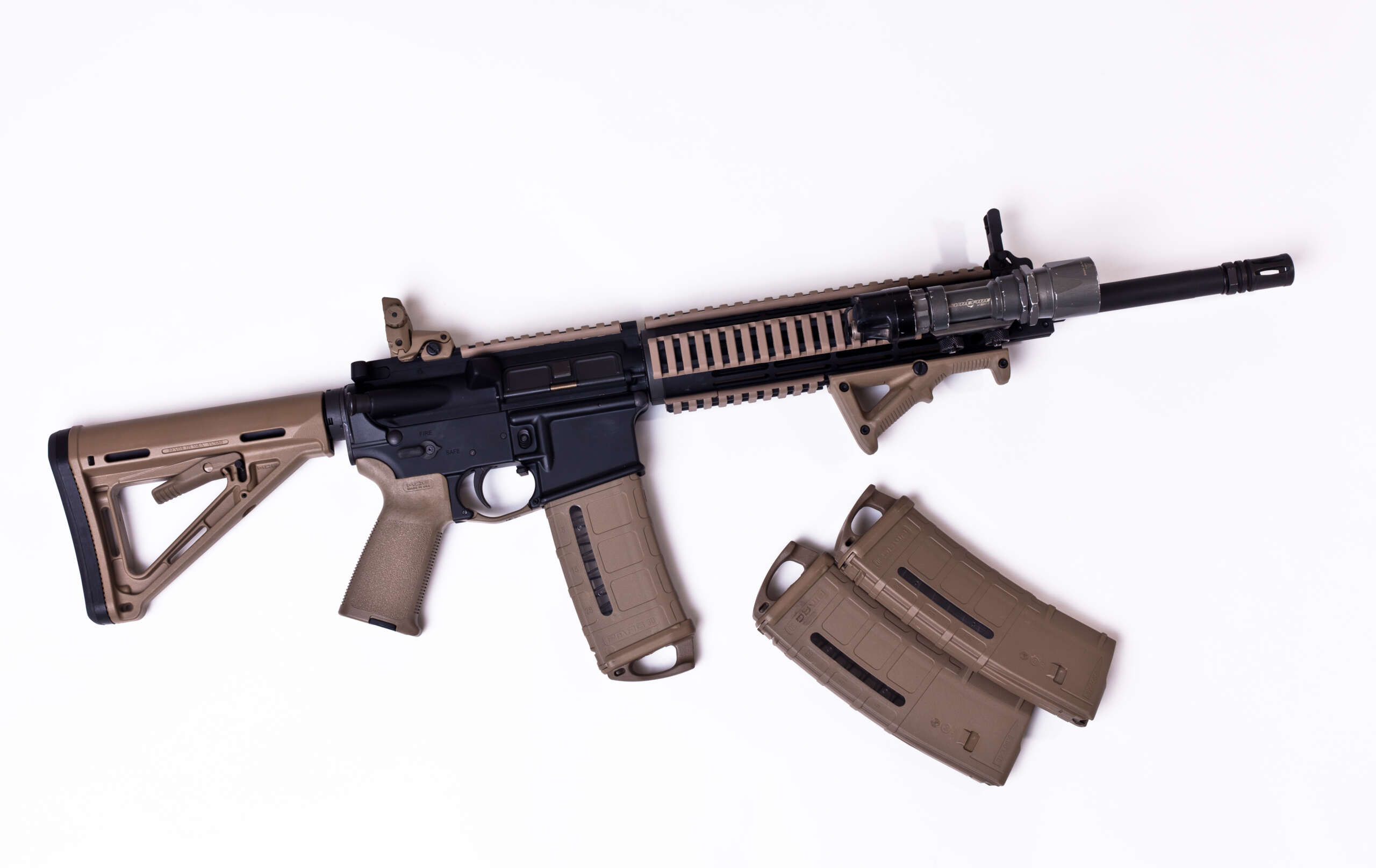
By 2024 more than 28 million AR-15-style rifles were estimated to be in circulation in the United States, a figure that dwarfs total Mini-14 production across its entire fifty-year history, reflecting both the AR-15’s open patent landscape and its considerable head start in aftermarket development. [2]
.jpg)
Military Lineage on One Side
The AR-15 shares its core design and most components with the military M16 rifle and M4 carbine, meaning magazines, sights and many parts interchange directly between civilian and service rifles. The Mini-14’s closest military relative, the selective-fire AC-556, saw far more limited institutional adoption before production ended in 1999. [1], [2]
Ranch Rifle vs. Modern Sporting Rifle
Ruger’s own Ranch Rifle branding, added in 1982, leaned directly into the Mini-14’s farm-and-field identity, while the AR-15 picked up the industry-wide label “modern sporting rifle,” a framing built around its modularity and military-adjacent lineage rather than around hunting utility or ranch chores. [1]
Overseas Adoption, Different Paths
Both rifles found institutional buyers abroad, but through different doors: the Mini-14 was adopted by French police under the designation Mousqueton A.M.D., while AR-15-pattern rifles and their military derivatives spread globally largely through NATO-standard ammunition compatibility and direct military lineage. [1], [2]

Accuracy Reputations, Then and Now
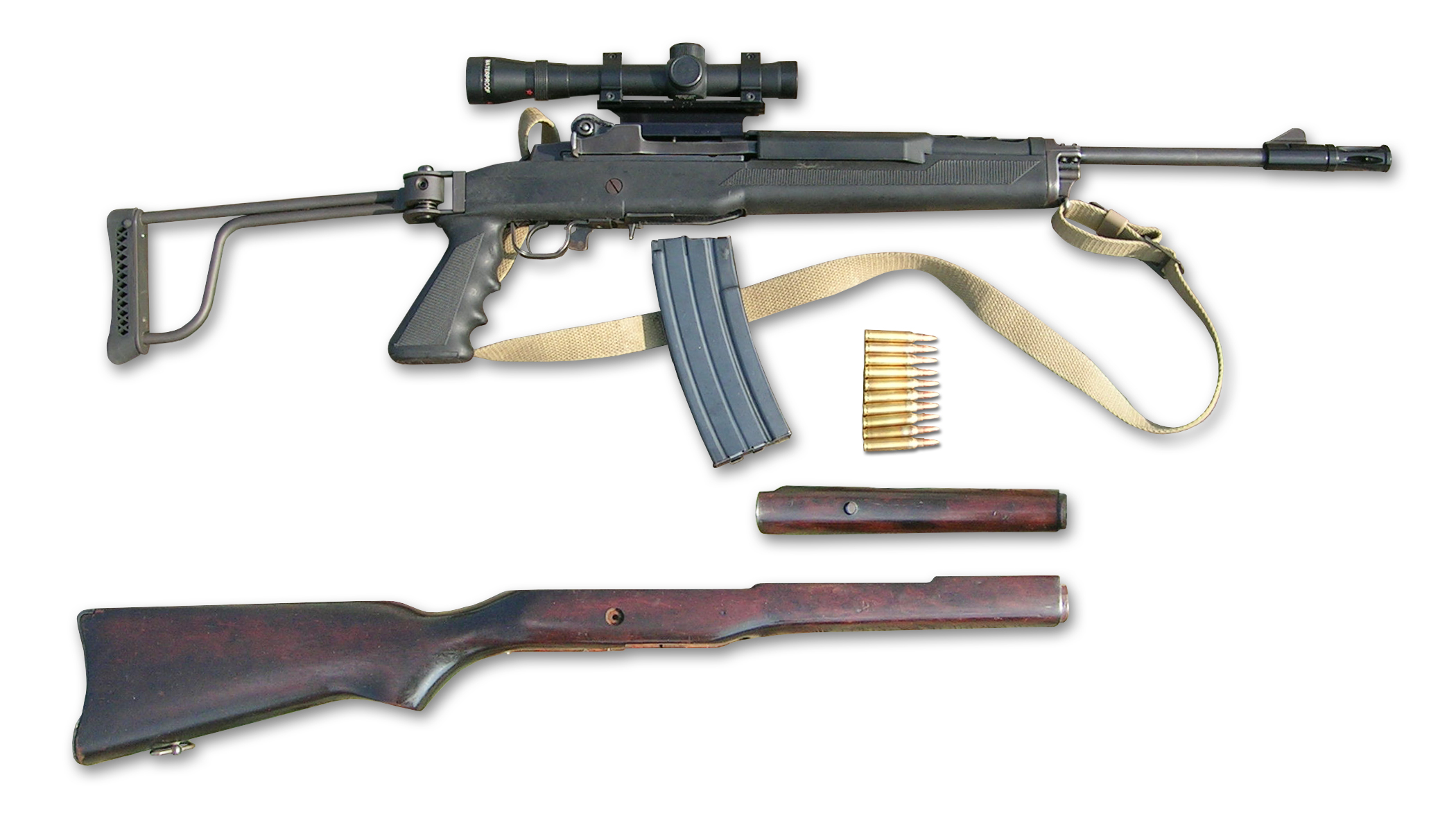
The Mini-14 carried a reputation for mediocre out-of-box accuracy for decades before Ruger’s 580-series overhaul addressed it directly, while the AR-15’s free-floating barrel options and heavier target-oriented builds have generally given it an easier path to match-grade accuracy without a factory redesign. [1]
Aftermarket Support Isn’t Close
The AR-15’s open patents and modular receiver design spawned an enormous industry of aftermarket parts, from barrels to triggers to entire upper assemblies. The Mini-14’s more conventional, largely Ruger-exclusive construction has a real but noticeably smaller aftermarket by comparison, decades on. [2]
Neither rifle has displaced the other after more than fifty years of overlapping sales, and the reasons buyers pick one over the other today are often less about ballistics than about which rifle’s silhouette, maintenance routine and modularity actually fit what they wanted from a .223-caliber semi-auto in the first place.