
Two pump shotguns, more than a decade apart in origin, have between them outsold nearly every other long gun design in America. The Remington 870 entered production in 1951; the Mossberg 500 followed a decade later. Both companies now claim to have built the most-produced shotgun of all time, and depending on whose count you use, both might be right. [1], [2]
Ten Years Apart, Built for the Same Job
Remington’s 870 was finished as a design in 1950 by a team of four engineers and reached shelves in 1951. Mossberg’s Carl Benson designed the 500 in 1961, aiming at the same broad hunting and general-purpose market the 870 already dominated a decade in. [1], [2]
Two Different Action Designs
Both are pump-action shotguns, but they get there differently. The 870 uses twin action bars connected to a rotating bolt head, while the Mossberg 500 pairs its own dual action bars with dual extractors and a hammerless internal design, small engineering choices longtime shooters still argue over. [1], [2]


Where the Safety Sits
One of the most-cited practical differences is safety placement. The Mossberg 500 puts its safety on top of the receiver, reachable with the trigger-hand thumb without breaking a cheek weld, while the 870’s cross-bolt safety sits just behind the trigger guard, a difference that shows up constantly in comparison reviews and range arguments. [1], [2]
Gauge and Capacity Options
Both platforms chamber 12 and 20 gauge as their core options. The 870 additionally offers 16 and 28 gauge plus .410 bore, while the Mossberg 500 briefly offered 16 gauge in the 1960s before dropping it. Magazine capacity on both runs from roughly 5 to 8 rounds depending on barrel length and tube extension. [1], [2]
| Feature | Remington 870 | Mossberg 500 |
|---|---|---|
| Manufacturer / origin [1], [2] | Remington, USA | O.F. Mossberg & Sons, USA |
| Introduced [1], [2] | 1951 | 1961 |
| Designer(s) [1], [2] | L. Ray Crittendon, Phillip Haskell, Ellis Hailston, G.E. Pinckney | Carl Benson |
| Safety location [1], [2] | Cross-bolt, behind trigger guard | Top of receiver, thumb-reachable |
| Gauge options [1], [2] | 12, 16, 20, 28, .410 bore | 12, 20, .410 bore (16 ga. briefly, 1963) |
| Magazine capacity [1], [2] | 3+1 to 7+1 rounds | 5+1 to 8+1 rounds |
| Military designation [1], [2] | M870 (U.S. Marine Corps) | M590 / M590A1 (U.S. military) |
| Claimed production [1], [2] | Over 11 million since 1951 | About 11 million by 2021 |
Military Paths Diverge
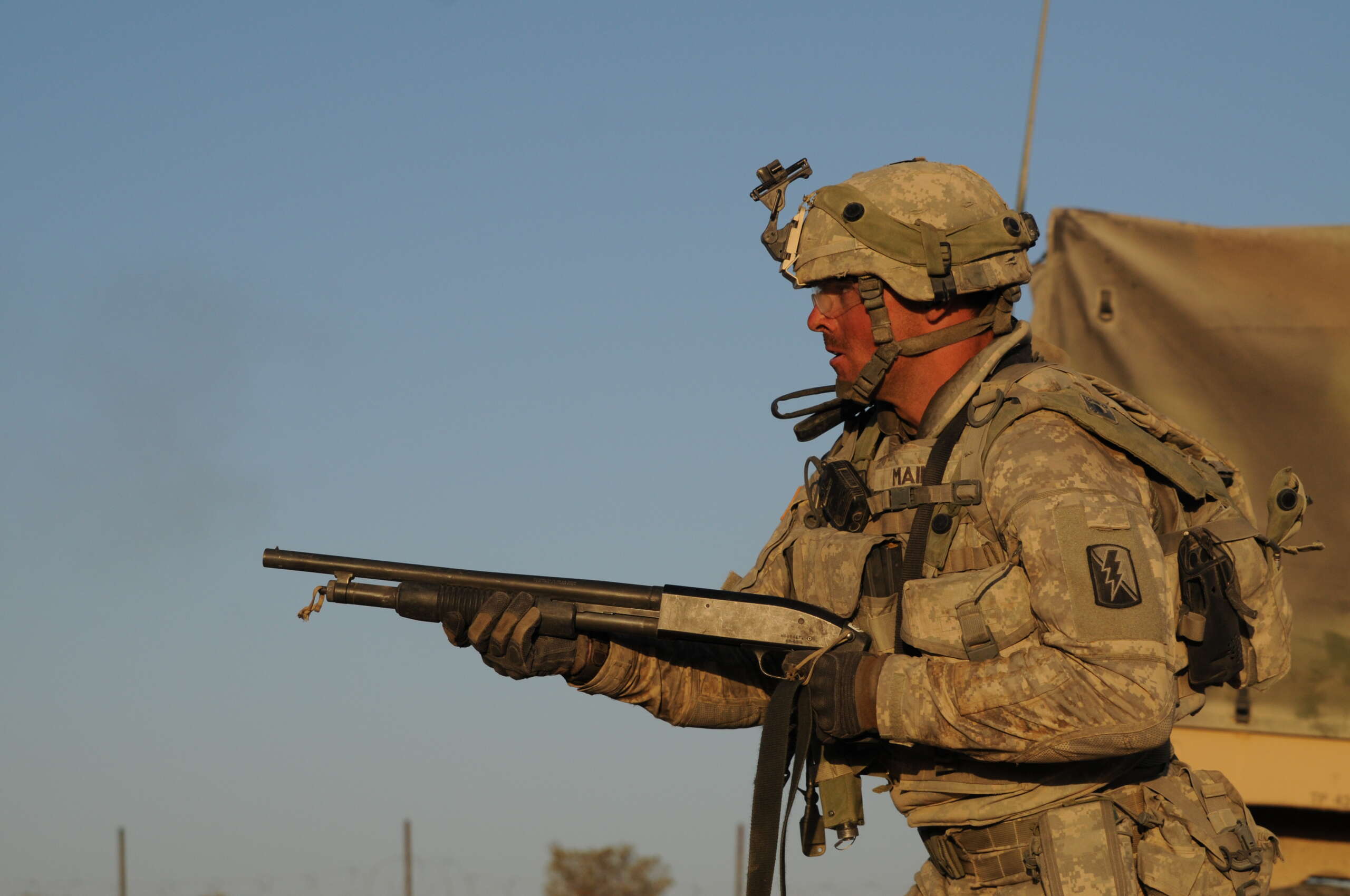
The two guns took different roads into military service. The Marine Corps designated its Remington as the M870, while Mossberg’s own military-contract descendant, the 590 introduced in 1987 and later the 590A1, became a standard-issue combat shotgun used extensively for door breaching in Iraq and Afghanistan. [1], [2]

Law Enforcement’s Long Relationships
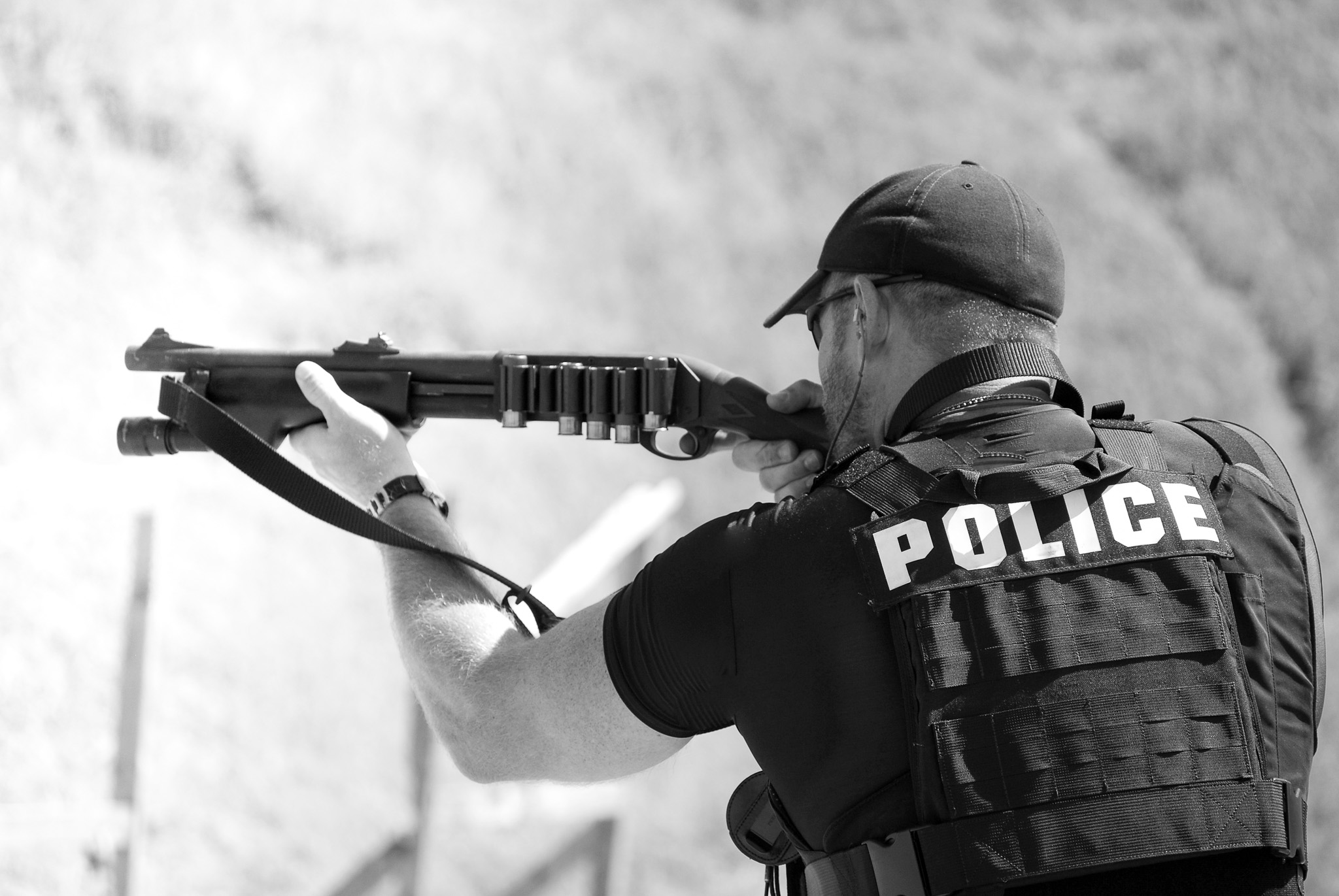
Both guns built decades-long institutional relationships of their own. The California Highway Patrol has carried the 870 continuously since 1965, while Mossberg’s simpler architecture and lower price made the 500 and its budget sibling, the Maverick 88, common patrol-car choices at departments watching their equipment budgets. [1], [2]

Premium and Budget Lines on Both Sides
Remington split its line into the walnut-and-blue Wingmaster and the budget-friendly Express, credited with pushing 870 sales past seven million by 1996. Mossberg took a similar approach, keeping the 500 as its mainstream option while selling the Maverick 88 as a simplified, lower-cost cousin. [1], [2]


The Production Numbers Race
Remington states more than 11 million 870s have been produced since 1951. Mossberg says roughly 11 million 500s had been built by 2021, a figure that makes the 500 the most-produced shotgun by some counts even though the 870 had a decade’s head start on it. Which gun actually holds the record depends on whose marketing claim you accept. [1], [2]
A Modern Pistol-Grip Offshoot
Mossberg’s Shockwave, a compact pistol-grip variant built on the 590 receiver, became the best-selling pump shotgun in the United States in 2020, proof that the 500 platform’s basic architecture still had room to spawn entirely new product categories nearly sixty years after its debut. [2]
Trigger Groups and Aftermarket Support
Both guns benefit from an enormous aftermarket of stocks, forends, rails, sights and barrels. The 870’s longer history and heavier law enforcement adoption gave it a larger installed base of compatible parts for longer, though the Mossberg 500’s simple takedown and widely cloned trigger group have narrowed that gap considerably over the last twenty years. [1], [2]
What Actually Separates Them Today
For most buyers the practical differences come down to safety placement, trigger-group takedown convenience and finish options rather than reliability or build quality, since both platforms have proven themselves across a combined seven decades of hunting, police and military use. [1], [2]
Neither shotgun displaced the other, and neither is likely to. Between them, the 870 and the 500 account for a meaningful share of every pump shotgun sold in America since the middle of the twentieth century, an unusually durable rivalry for two guns built more than a decade apart by completely different design teams.