
The compact 9mm PDW market has become one of the most interesting corners of the firearm industry.
Shooters want something smaller than a rifle, easier to control than a traditional handgun, cheaper to feed than a rifle-caliber platform, and ideally fun enough to burn through several boxes of ammunition before realizing what they have done to their range budget.
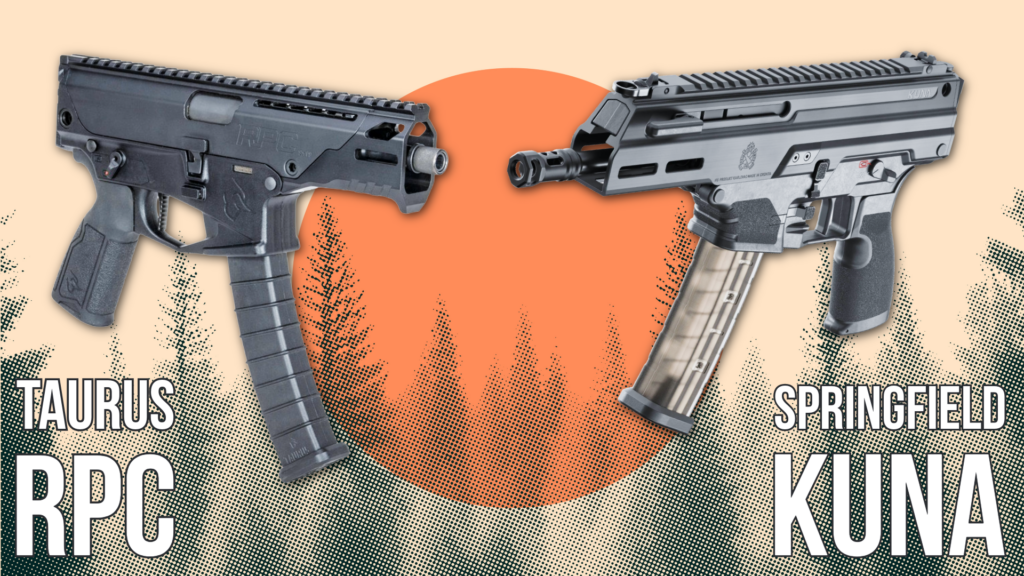
That brings us to two of the newest options: Taurus RPC vs Springfield Kuna
Each are compact, roller-delayed 9mm platforms. Both use proprietary magazines. Both have ambidextrous controls, threaded barrels, folding-brace options, Picatinny rails, and M-LOK accessory mounting.
They are clearly chasing the same customer.
The Taurus is smaller and less expensive. The Springfield has a longer barrel, included sights, a more established track record, and a more developed magazine supply.
So, which one gives you more for your money?
The honest answer depends on whether you are buying a fun range gun or something you may eventually depend on for defensive use.
Taurus RPC vs. Springfield Kuna Specifications
| Specification | Taurus RPC | Springfield Kuna |
|---|---|---|
| Caliber | 9mm | 9mm |
| Operating system | Roller-delayed | Roller-delayed |
| Barrel length | 4.5 inches | 6 inches |
| Barrel thread | 1/2×28 | 1/2×28 |
| Magazine capacity | 32 rounds | 30 rounds |
| Magazines included | Two | Two |
| Sights included | No | Hybrid metal flip-up sights |
| Charging handle | Reversible, non-reciprocating | Reversible, non-reciprocating |
| Controls | Fully ambidextrous | Fully ambidextrous |
| Top rail | Full-length Picatinny | Full-length Picatinny |
| Accessory mounting | M-LOK | M-LOK |
| Rear brace interface | Picatinny | Picatinny |
| Unbraced length | 12.2 inches | 15.5 inches |
| Unbraced weight | 72.31 ounces | 4 pounds, 10 ounces |
| Braced length | 12.2 to 21 inches | 15.5 to 24.5 inches |
| Braced weight | 78.65 ounces | 5 pounds, 5 ounces |
| Unbraced MSRP | $939.99 | $1,179 |
| Braced MSRP | $1,098.99 | $1,330 |
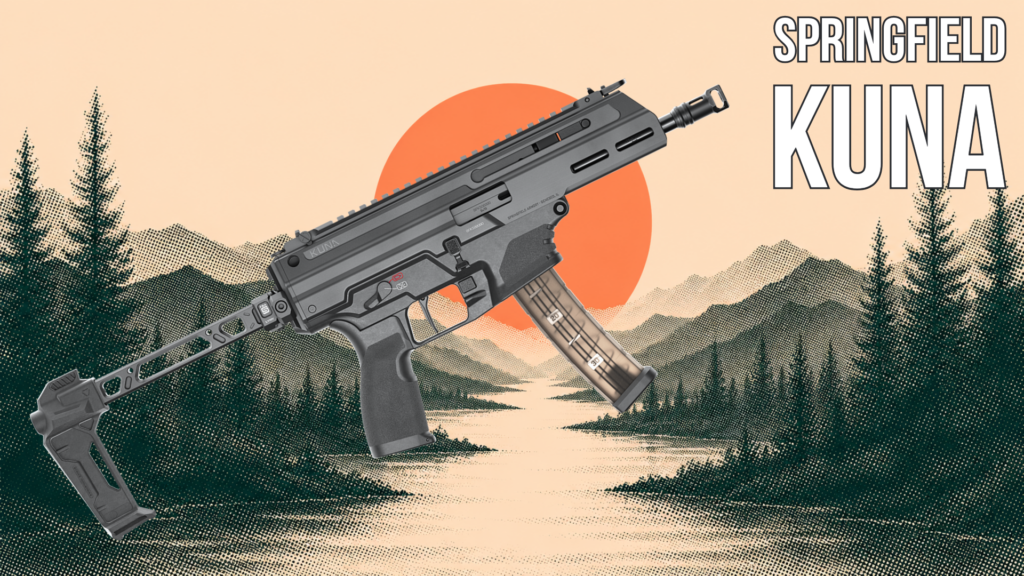
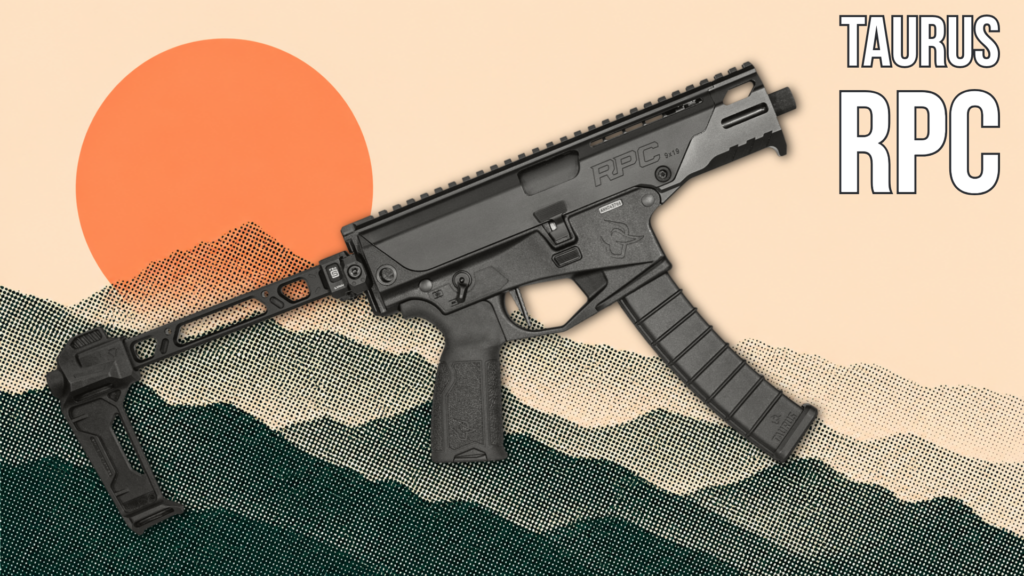
Taurus equips the RPC with a 4.5-inch quick-change barrel, two 32-round magazines, fully ambidextrous controls, an AR-15-compatible grip, three QD sling points, and a flat-faced trigger. Springfield gives the Kuna a 6-inch cold radial hammer-forged barrel, two translucent 30-round magazines with metal feed lips, a monolithic aluminum upper, a glass-filled polymer lower, and adjustable hybrid sights.
Two Roller-Delayed Guns With Different Personalities
The biggest mechanical similarity between these guns is the roller-delayed operating system.
Most inexpensive 9mm carbines and large-format pistols use direct blowback. That system is simple and reliable, but it requires a relatively heavy bolt and strong recoil spring to keep the action safely closed while chamber pressure drops.
The result can be more movement, more reciprocating mass, and a sharper recoil impulse than people expect from a firearm chambered in 9mm.
A roller-delayed system slows the opening of the action mechanically. This allows the manufacturer to use less bolt mass while producing a smoother recoil impulse and reducing how much the firearm moves between shots.
Neither gun is completely recoil-free. It is still firing ammunition, not sending strongly worded emails downrange. Both, however, should feel noticeably smoother than many conventional blowback PCCs.
Independent testing supports that. Reviewers have consistently described both platforms as soft-shooting and easy to control during rapid strings. One RPC reviewer produced a 1.78-inch group at 25 yards with Hornady Critical Defense, while Kuna tests have reported approximately 1.5-inch groups at 25 yards with selected ammunition and more than 500 rounds without a firearm-induced malfunction.
Size and Portability: The Taurus RPC Takes It
The RPC’s most obvious advantage is its size.
At 12.2 inches long without a brace, the Taurus is 3.3 inches shorter than the Kuna. With both Strike Industries braces extended, the RPC measures 21 inches compared with 24.5 inches for the Kuna.
The braced RPC is also approximately 6 ounces lighter.
That might not sound dramatic when reading a specifications table, but the difference is noticeable when placing the guns inside a backpack, vehicle safe, discreet case, or crowded range bag.
The Kuna is compact compared with a rifle. The RPC is compact compared with the Kuna.
The shorter 4.5-inch barrel also makes the RPC attractive as a suppressor host because it keeps the completed package from becoming excessively long.
For a shooter who values the smallest possible package, the RPC wins this category without much debate.
Size and portability winner: Taurus RPC
Barrel and Accuracy: The Springfield Kuna Has the Advantage
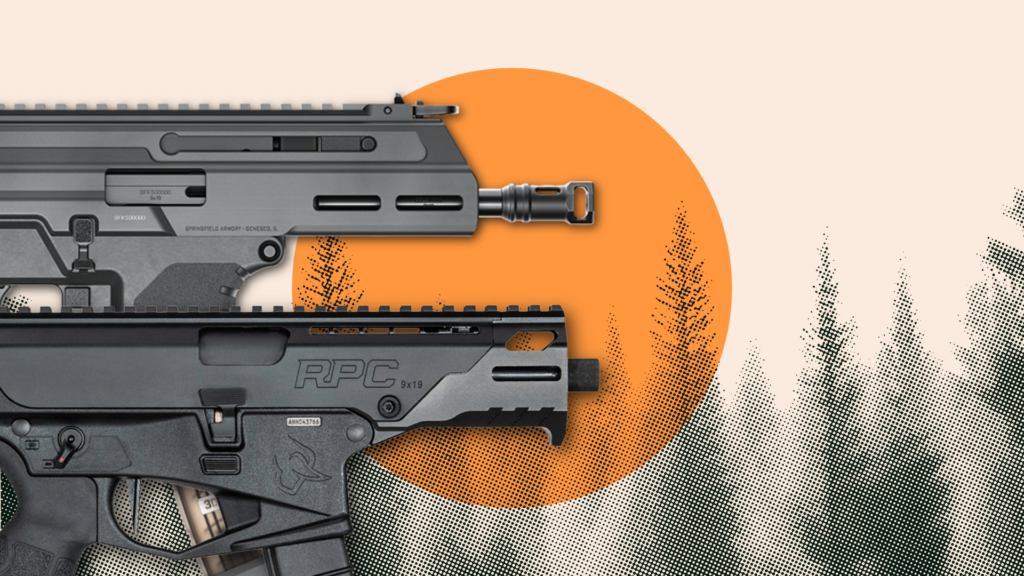
The Springfield uses a 6-inch cold radial hammer-forged barrel with a Melonite finish and 1:10 twist rate.
The Taurus uses a 4.5-inch threaded, quick-change steel barrel.
The Kuna’s extra 1.5 inches of barrel gives it several practical advantages. It provides a longer handguard, a greater distance between iron sights, slightly more forward weight, and the potential for modestly higher velocity from the same ammunition.
The fixed barrel and monolithic aluminum upper also create a rigid platform for optics and accessories.
The RPC is still capable of excellent practical accuracy. Its shorter barrel is not an issue at typical indoor-range, defensive, or steel-target distances. A short barrel does not automatically make a firearm inaccurate.
The Kuna simply gives the shooter a little more platform to work with. During longer range sessions, the additional weight and handguard space can make it more comfortable and stable.
There is one concern with the Kuna’s short front end. Testing by Pew Pew Tactical found that the handguard became hot after several rapid magazines, and the limited rail space gave the support hand few places to escape the heat. Gloves or rail covers may become worthwhile additions for high-volume shooting.
Barrel and range accuracy winner: Springfield Kuna
Trigger and Controls Taurus RPC vs Springfield Kuna
Both guns are designed around modern controls rather than recreating the manual of arms of an older submachine gun.
Both offer:
- Ambidextrous safeties
- Ambidextrous magazine releases
- Ambidextrous bolt controls
- Reversible, non-reciprocating charging handles
- AR-pattern grips
- Rear Picatinny brace mounting
- Full-length optic rails
- M-LOK accessory slots
The RPC uses a single-stage flat-faced trigger and a soft rubber overmolded AR-15-compatible grip. Reviewers have generally spoken positively about the trigger, although one 300-round test found that it felt better after being broken in. That same test found a loose grip screw that required tightening.
The Kuna uses a flat aluminum trigger and an AR-pattern grip with Springfield’s Adaptive Grip Texture. Its charging handle automatically folds down and out of the way after being used.
The Kuna’s safety has received some criticism. One reviewer found it easy to move from safe to fire but more difficult to return to safe without changing hand position. That is not a dealbreaker, but it is something worth checking during a hands-on comparison.
Ergonomics are personal. The RPC feels more compact and stripped down, while the Kuna feels more like a miniature carbine.
Controls and ergonomics winner: Tie
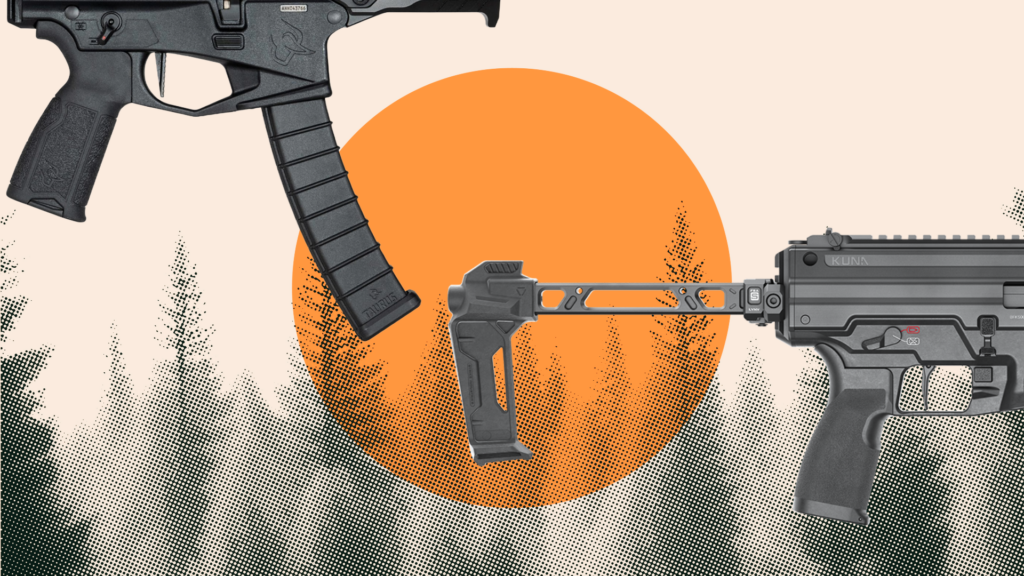
Sights and Optics: Springfield Gives You More in the Box
The RPC arrives with a full-length Picatinny rail but no iron sights.
Technically, Taurus describes the front and rear as “optics ready.” Practically, this means you need to purchase a red dot or a separate set of sights before doing much useful shooting.
The Kuna includes one of the more interesting factory sight systems in this category.
Its adjustable metal sights can be used folded down in a pistol-style configuration or flipped up to provide a traditional aperture and front post arrangement. They are not a replacement for a quality red dot, but they allow you to take the gun to the range immediately and provide a permanent backup system after an optic is installed.
This matters when comparing price.
The Taurus may be approximately $230 less expensive at MSRP, but part of that savings will disappear once you purchase sights or an optic.
Factory sight winner: Springfield Kuna
Magazine Capacity and Availability
The RPC holds 32 rounds. The Kuna holds 30.
Two rounds are two rounds, but this is not a meaningful advantage for most shooters. Magazine durability, price, and availability are far more important than the difference between 30 and 32 rounds.
Both guns use proprietary magazines.
That means neither gun benefits from the huge supply of Glock, Colt-pattern, Scorpion, or MP5 magazines already on the market.
The Kuna magazines have translucent polymer bodies and metal feed lips, allowing shooters to estimate their remaining ammunition without removing the magazine. Springfield currently sells factory 30-round Kuna magazines for $25.
The RPC includes two 32-round magazines, but Taurus had not clearly listed spare RPC magazines through its online accessory store at the time of this comparison.
That could change quickly. The RPC is still a new platform. Right now, however, the Kuna has the more established and predictable magazine supply.
One RPC test also recommended marking individual magazines so potential magazine-related issues could be identified and tracked.
Magazine winner: Springfield Kuna
Suppressor Use: The RPC Is Clever, but More Complicated
Both guns use the common 1/2×28 thread pattern, making them compatible with many 9mm suppressor mounting systems.
The Taurus takes a more mechanically involved approach.
The RPC ships with two different locking tips. The factory-installed 110-degree tip is intended for standard unsuppressed ammunition. An included 85-degree tip is designed for suppressed use and subsonic ammunition.
To change the tip, the user must partially disassemble the firearm, remove the bolt carrier assembly, separate the bolt head, and replace the locking component.
Taurus specifically states that using the correct locking tip is critical for proper and safe operation.
This system gives the RPC a degree of tuning that the Kuna does not appear to offer. A dedicated suppressed setup could be exceptionally smooth, particularly with the short 4.5-inch barrel.
The drawback is convenience.
An RPC owner should not treat attaching and removing a suppressor as casually as changing a muzzle device. The gun must be configured correctly for its intended ammunition and setup.
The Kuna does not require the same published locking-tip change. Reviewers have run it both suppressed and unsuppressed with favorable results, including testing across multiple suppressors and ammunition types. One test recorded three malfunctions over more than 1,000 rounds, including suppressed and deliberately fouled operation.
The Taurus is the more interesting dedicated suppressor host. The Kuna is the simpler suppressor host.
Dedicated compact suppressor winner: Taurus RPC
Suppressor convenience winner: Springfield Kuna
Reliability and Track Record
This is the most important category if the gun will be used for anything beyond recreational shooting.
The Kuna was introduced in April 2025. The RPC arrived almost exactly one year later in April 2026. The Springfield has therefore had considerably more time in consumer hands.
Multiple Kuna reviews have documented favorable results at higher round counts. Pew Pew Tactical passed 500 rounds without a firearm-induced malfunction. American Firearms reported three stoppages during more than 1,000 rounds of mixed suppressed, unsuppressed, clean, and deliberately dirty testing.
Early RPC testing has produced more varied results.
Some reviewers have reported excellent performance across multiple bullet weights and defensive loads. One 300-round test ran 115-grain and 147-grain ammunition without an issue, while another reviewer reported reliable operation with hollow points and excellent practical accuracy.
Other early reviewers have publicly reported malfunctions and problems with their test guns. That does not establish that the RPC is broadly unreliable, but it does show that the platform is still working through its first wave of independent testing.
This is where the release dates matter.
The Kuna is no longer completely new. The RPC is still very new.
For a range gun, being an early adopter can be part of the fun. For a defensive gun, it is reasonable to place more value on a longer and more consistent record.
Current reliability-confidence winner: Springfield Kuna
Which Is Better for the Range?
For a recreational range shooter, the Taurus RPC makes a strong argument.
It costs less, holds two additional rounds, occupies less space, has an enjoyable trigger, and produces the smooth recoil impulse people want from a roller-delayed system.
It also looks and feels different from the usual collection of direct-blowback AR-9s. There is something satisfying about a compact gun that makes 9mm feel even softer while encouraging fast transitions and follow-up shots.
The Springfield is arguably the more refined range platform. Its longer barrel, included sights, greater weight, and larger handguard make it easier to stabilize. It also has the better magazine situation.
The question is whether that refinement is worth another $230.
For someone buying a gun strictly for recreational use, I do not think the answer is automatically yes.
You could buy the RPC, add a red dot, purchase ammunition, and still remain near the price of a braced Kuna at MSRP.
Best pure range value: Taurus RPC
Which Is Better for EDC? Taurus RPC vs Springfield Kuna
We need to be realistic about the term EDC.
Neither the RPC nor the Kuna is a normal concealed-carry pistol. The braced RPC weighs nearly five pounds unloaded. The braced Kuna weighs more than five pounds.
For these firearms, EDC generally means:
- Backpack or off-body carry
- Secure vehicle transportation
- Property or outdoor use
- Home defense
- A compact defensive platform stored in a controlled location
The RPC is clearly easier to transport. Its shorter folded length means it fits inside smaller bags and storage compartments.
The Kuna, however, currently offers the stronger defensive package.
It has a longer testing history, included backup sights, inexpensive factory magazines, a fixed hammer-forged barrel, and more documented high-round-count testing.
Any individual firearm intended for defensive use should still be thoroughly tested with its exact magazines, optic, accessories, and chosen defensive ammunition. The manufacturer’s name on the receiver does not remove that responsibility.
For a gun that may be carried regularly or relied on defensively, I would accept the Kuna’s added size and cost in exchange for its more established record.
Best for defensive EDC-style use: Springfield Kuna
Price and Total Value Taurus RPC vs Springfield Kuna
At MSRP, the Taurus saves you approximately:
- $239 on the unbraced version
- $231 on the braced version
That is enough money to matter.
The RPC buyer, however, still needs a sighting system. The Kuna buyer can shoot immediately with the included hybrid sights and can purchase additional factory magazines for $25.
That narrows the real price difference.
The Taurus remains the less expensive gun, particularly if you already own a suitable red dot. The Springfield gives you a more complete package from the beginning./ima
Final Verdict Taurus RPC vs Springfield Kuna
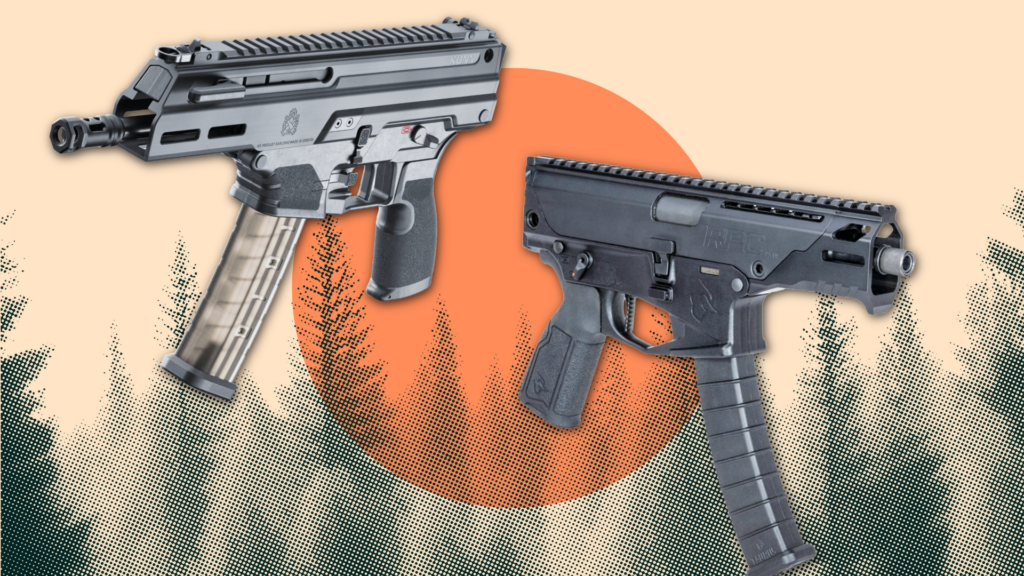
The Taurus RPC is the better bargain for a dedicated range shooter.
It is smaller, lighter, less expensive, soft-shooting, and genuinely fun. Its 4.5-inch barrel also makes it one of the more appealing compact suppressor hosts, provided the owner understands and follows the locking-tip requirements.
The Springfield Kuna is the better overall buy for someone who wants one gun to cover both recreational and defensive roles.
It costs more, but the extra money buys a longer hammer-forged barrel, included metal sights, readily available magazines, a larger support area, and a more established reliability record.
The decision comes down to what you expect the gun to do.
Choose the Taurus RPC when maximum compactness, range enjoyment, and lower initial cost are your priorities.
Choose the Springfield Kuna when you are willing to spend more for a more complete package and greater confidence in a defensive application.
My overall recommendation is the Springfield Kuna, but only by a narrow margin.
The RPC may eventually become the value leader in this category. It has the design, price, and features to get there. It simply needs more time and more high-round-count testing before I would place it ahead of the Kuna for serious use.
For pure fun per dollar, the Taurus wins.
For the gun I would currently choose to cover the range, home defense, and backpack-PDW roles with one purchase, the Kuna gets the final vote.
Checkout our other great Gun Reviews HERE