
Ruger and Smith & Wesson faced the identical problem in the late 1970s and early 1980s: their existing medium-frame .357 Magnum revolvers were wearing out faster than expected under a steady diet of full-power magnum loads. Smith & Wesson answered first with the L-frame Model 686 in 1981; Ruger followed four years later with the GP100. [1], [2]
The L-Frame’s Origin
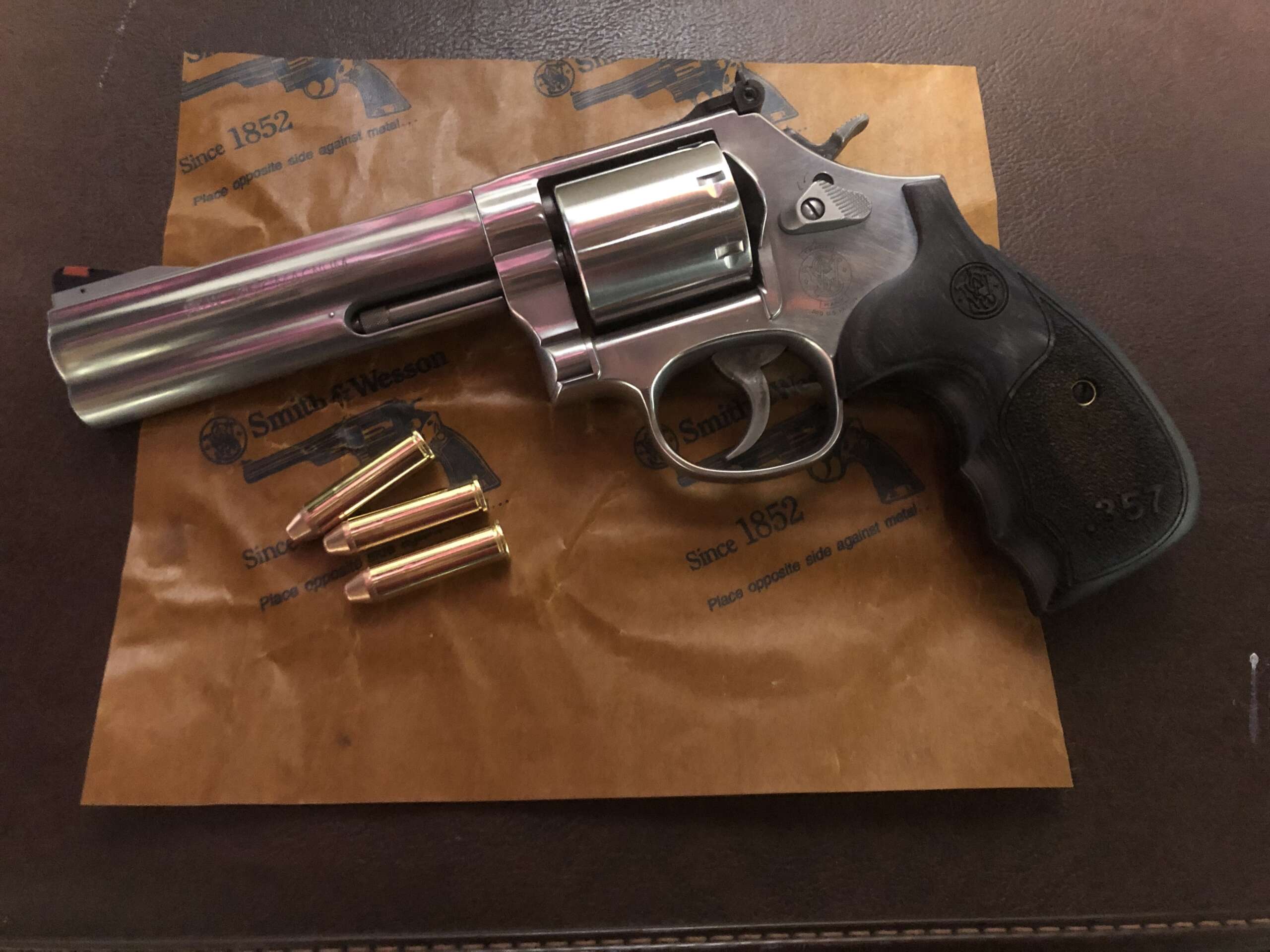
Smith & Wesson’s K-frame .357s, like the Model 19, had a reputation for loosening up when fed full-power magnum loads rather than milder .38 Special, so the company built a new, slightly larger L-frame specifically to put more metal around the forcing cone and give the same basic size revolver more margin under sustained use. [2]
Ruger’s Answer, Four Years Later
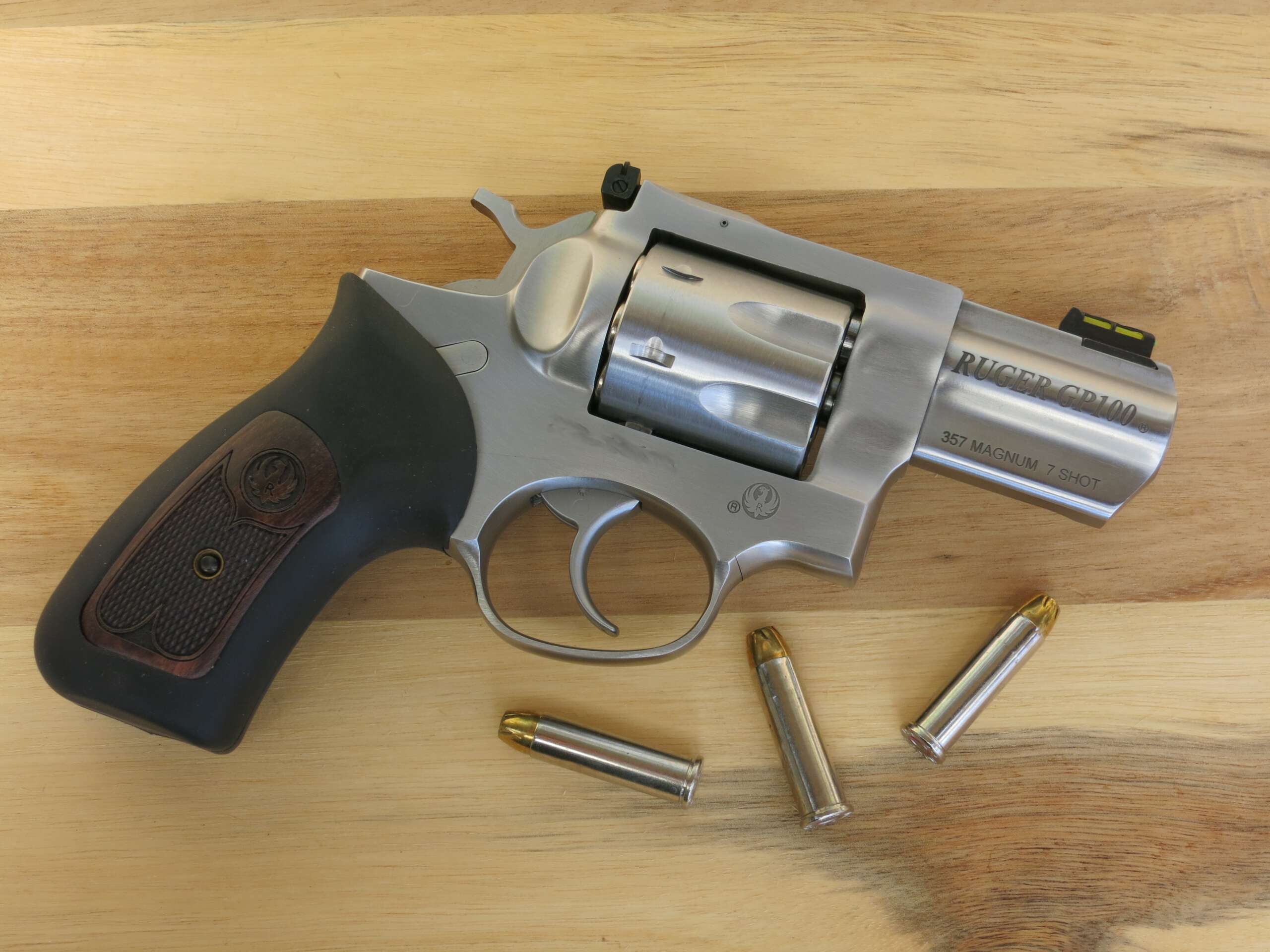
Ruger addressed the identical durability problem differently, retiring its entire Security-Six family in favor of the GP100, a from-scratch design built around a sideplate-free frame, stronger steels, and a triple-locking cylinder mechanism borrowed from the larger Redhawk, arriving at the same basic goal from a different starting point. [1]
.jpg)
Stainless From the Start vs. a Later Option
The 686 was conceived from day one as the stainless steel counterpart to Smith & Wesson’s blued Model 586, giving it built-in corrosion resistance as a launch feature. Ruger’s GP100 offered both blued carbon steel and stainless finishes side by side rather than treating stainless as the flagship option. [1], [2]
Two Different Grip Philosophies
The GP100’s peg-grip system lets any shape of aftermarket panel bolt directly onto a small internal stud, while the 686 uses Smith & Wesson’s more conventional grip frame with interchangeable square-butt or round-butt panels, a difference that shaped how each gun’s aftermarket grip market developed. [1], [2]
| Feature | Smith & Wesson 686 | Ruger GP100 |
|---|---|---|
| Manufacturer / origin [1], [2] | Smith & Wesson, USA | Sturm, Ruger & Co., USA |
| Introduced [1], [2] | 1981 | 1985 |
| Frame type [1], [2] | L-frame (medium) | GP100 frame (medium, sideplate-free) |
| Standard capacity [1], [2] | 6 rounds (7 in 686 Plus) | 5 to 7 rounds, depending on caliber |
| Caliber options [1], [2] | .357 Magnum, .38 Special | .22 LR, .327 Fed. Mag., .357 Mag., .38 Spl., .44 Spl., 10mm Auto |
| Barrel lengths [1], [2] | 2.5 in to 8 in | 2.5 in to 6 in |
| Grip system [1], [2] | Conventional grip frame, square/round butt | Peg-mounted, any panel shape |
| Notable use [1], [2] | FBI agents at 1986 Miami shootout; Navy SEAL waterborne ops | Custom Shop Super GP100 competition revolver |
Capacity: Six, Seven, or More
Standard 686s hold six rounds, with the 686 Plus variant adding a seventh via a slightly wider cylinder. GP100 capacity varies more by caliber, running five rounds in .44 Special up to six or seven in .357 Magnum, and ten in the rimfire .22 LR version. [1], [2]
A Wider Caliber Spread on One Side
The 686 has stayed a .357 Magnum and .38 Special platform throughout its life, while the GP100 expanded over time to also cover .22 LR, .327 Federal Magnum, .44 Special and 10mm Auto, giving Ruger’s design a broader chambering spread than Smith & Wesson’s L-frame ever adopted. [1], [2]

Miami and the FBI Connection
The 686 earned a specific place in law enforcement history when FBI agents carrying personally owned examples used them during the bureau’s 1986 Miami shootout, an incident that went on to reshape FBI service-pistol doctrine entirely in the years that followed. [2]
Underwater and Undercover
The 686’s stainless construction also made it a natural fit for U.S. Navy SEAL waterborne operations, where corrosion resistance mattered as much as stopping power, a use case the GP100 never built the same institutional reputation around despite offering its own stainless option. [2]

Competition and Signature Editions on Both Sides
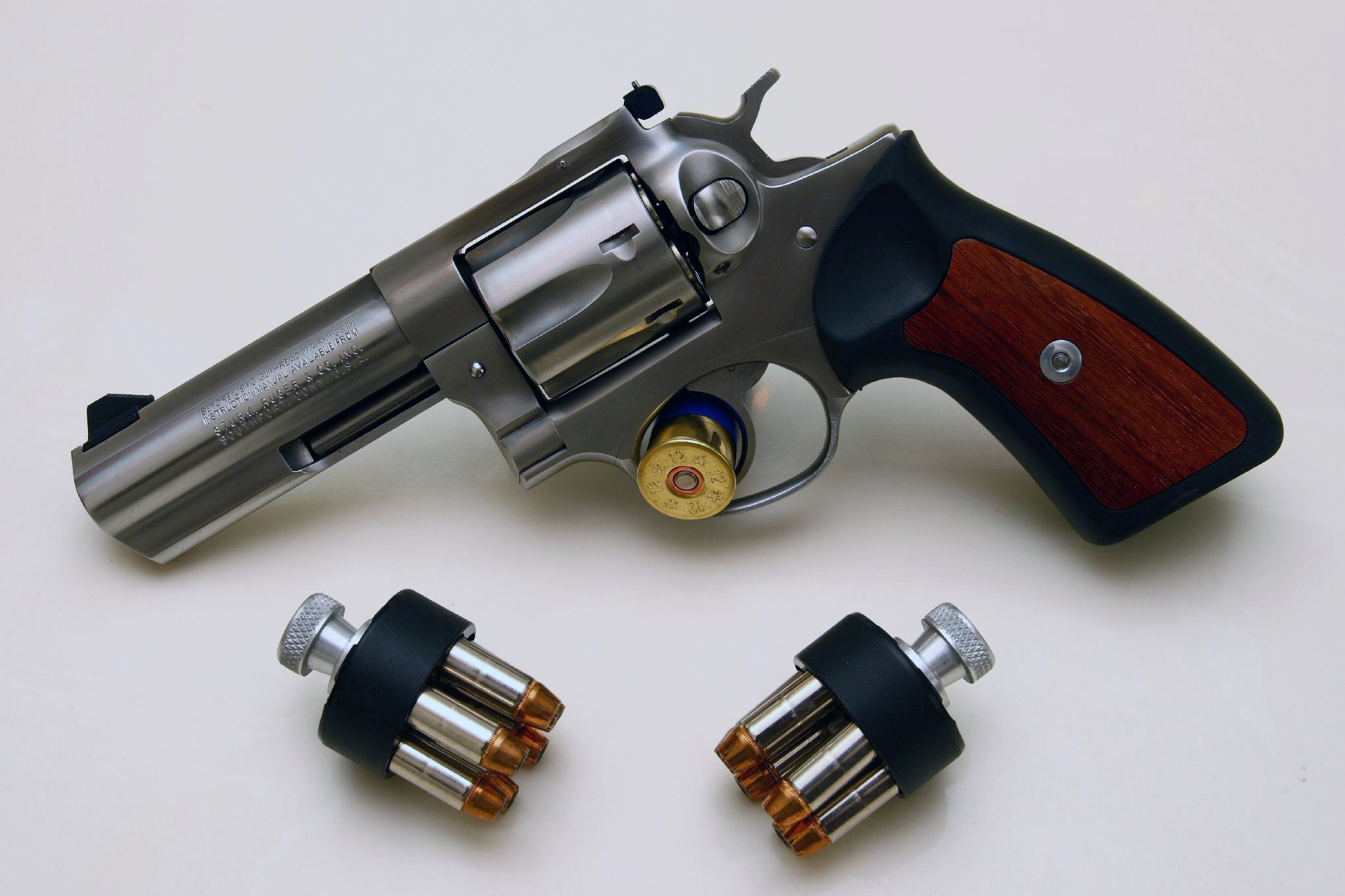
Smith & Wesson built its own tuned competition line with the Target Champion and later Pro Series 686s, match-grade barrels included, while Ruger answered with the Match Champion, the Wiley Clapp collaboration edition, and the Custom Shop’s moon-clip-fed Super GP100, each company chasing the same competitive-shooter audience. [1], [2]

Sights: Adjustable by Default
Both platforms offer adjustable rear sights as standard on their full-size configurations, a feature that separates them from the fixed-sight duty variants each company also sells, and both now have factory fiber-optic-sighted competition models for shooters who want a faster sight picture. [1], [2]
Forty-Plus Years, No Clear Winner
Between the 686’s 1981 debut and the GP100’s 1985 follow-up, both platforms have now been in continuous production for more than four decades, each with its own competition pedigree, its own institutional adoption story, and its own loyal following that rarely crosses over to the other brand. [1], [2]
Two companies solved the same durability problem in the 1980s in different ways, and both solutions turned out to be right: the L-frame 686 and the GP100 remain the default recommendation for a full-size .357 Magnum revolver nearly half a century later, competing without either one ever quite settling which is actually better.