
The Taurus RPC is a 9mm firearm built around a roller-delayed operating system. This overview examines its published specifications, design terminology, and the limits of the available information. It separates manufacturer descriptions from conclusions that would require independent testing.
This article does not report a firsthand range test. There are no original accuracy measurements, recorded reliability results, or measured recoil comparisons behind it. That distinction matters: a specification sheet can establish what a manufacturer lists, but it cannot establish how an individual example performs.
Introduction and published configurations
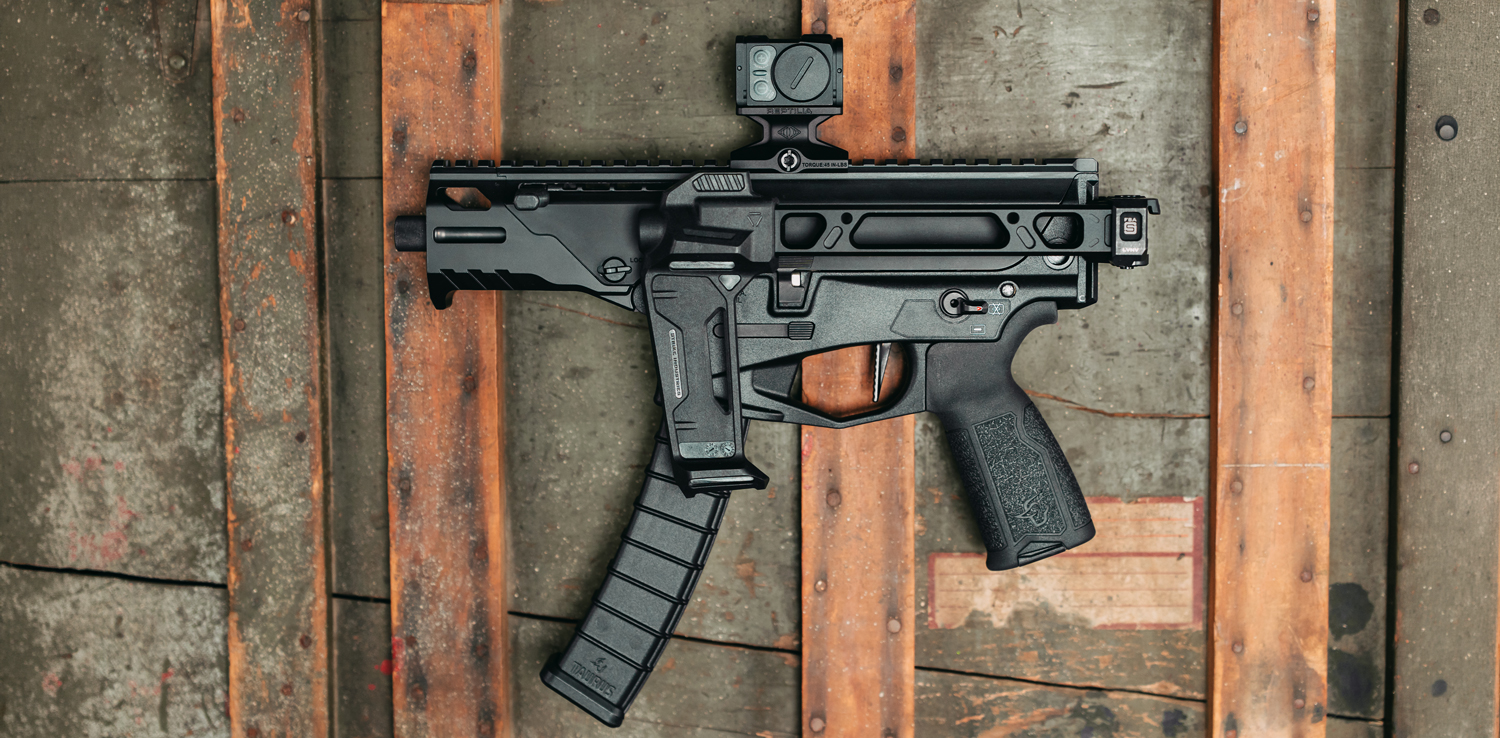
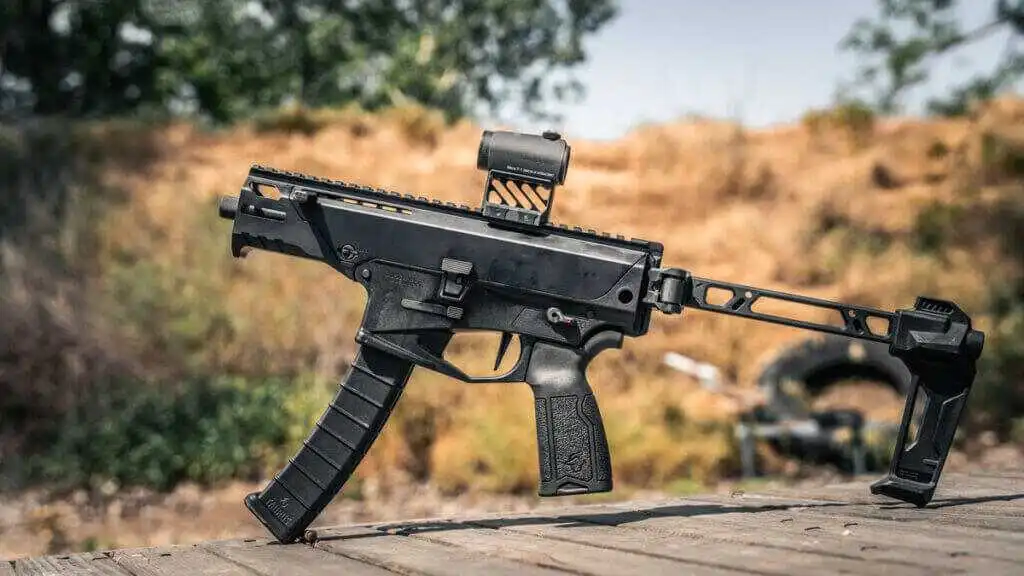
Taurus announced the RPC on April 14, 2026, describing it as its first dedicated 9mm PDW platform. Its announcement identifies a standard configuration and a version supplied with a Strike Industries folding brace. These details come from the Taurus launch announcement.
Configuration is important when interpreting an article or photograph. An accessory shown on one example should not automatically be treated as standard equipment on every version. A useful description identifies the specific model being discussed and keeps its measurements separate from those of other configurations.
What roller-delayed means
Roller-delayed blowback describes a broad operating principle in which mechanical resistance slows the initial movement of the breech mechanism. The name identifies a design approach; it is not an accuracy rating, a durability certification, or a promise about the experience of every user.
Taurus describes reduced felt recoil as a benefit of the RPC’s system. This remains a manufacturer claim in this overview. Establishing the size of any difference would require a documented comparison, rather than relying on phrases such as “softest shooting” or assuming that all roller-delayed firearms behave alike.
Published dimensions and specifications
The manufacturer specification page for item 1-RPC941 lists 9mm Luger, a 4.5-inch barrel, an overall length of 12.2 inches, a height of 10.6 inches, and a width of 2.5 inches. Listed weight is 72.31 ounces, approximately 4.52 pounds.
The same page lists two 32-round magazines and an optics-ready sight specification. Its 12.2-inch measurement is labeled overall length; the specification table does not label it as a brace-folded measurement. Retaining the manufacturer’s description avoids presenting an inferred dimension as a verified fact.
Controls and exterior design
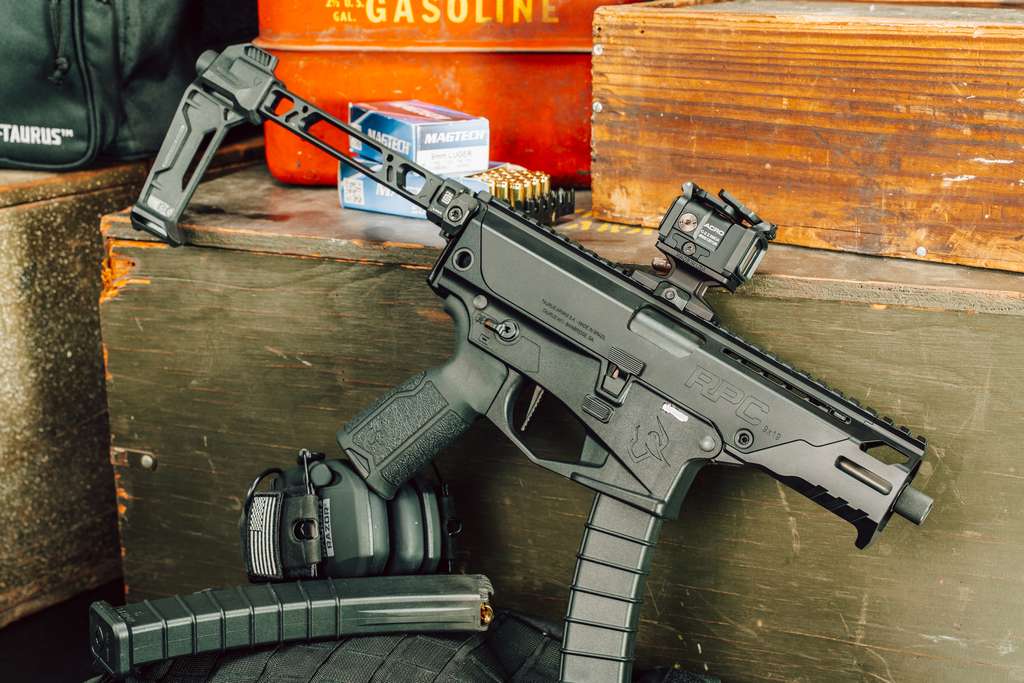
The launch announcement describes controls accessible from both sides, including the bolt release/lock and magazine release. It also identifies a reversible charging handle that does not reciprocate during firing. These are descriptions of the layout, rather than findings from an ergonomic assessment.
Accessibility on both sides does not by itself demonstrate equal comfort for every person. Control reach, hand size, and the interaction between controls can affect an assessment. Without documented handling observations, it would be premature to describe the layout as universally intuitive or comfortable.
Materials and published features
Taurus describes aluminum construction in its announcement, while the specification table identifies a steel chassis and steel barrel. The published feature list also mentions a top rail, an M-LOK handguard, a flat-faced trigger, and a rubber-covered grip. These descriptions refer to different parts of the firearm.
Material names alone do not establish service life. Likewise, the presence of a particular feature does not prove workmanship, consistency, or durability. Those questions call for inspection and longer-term evidence, so this overview avoids converting a feature list into a quality rating.
Magazine information and compatibility claims
The published magazine capacity describes the configuration documented by Taurus. It does not establish interchangeability with magazines from another firearm. This overview makes no cross-platform compatibility claim and does not assume that a shared caliber means parts are interchangeable.
Claims about the absence of aftermarket support also need a date and a reliable source. A statement that no alternatives exist can become outdated, and an incomplete search cannot prove it. For that reason, this article does not characterize magazine availability as the RPC’s only limitation.
What remains unverified
Accuracy, reliability, and long-term durability are separate questions. A report about one of them does not settle the others. A credible evaluation should explain the sample being examined, disclose its conditions, and describe problems as clearly as successful results, without turning limited observations into universal conclusions.
The same standard applies to comparisons with established designs. Sharing an operating-system category does not establish equivalent manufacturing, longevity, or performance. Familiar names can help explain terminology, but they should not stand in for evidence about this particular model.
Reading this overview in context
The documented information supports a description of the RPC’s dimensions, configuration, and advertised features. It does not support an unqualified recommendation for a defensive role or a claim that this model is superior to its competitors. Those judgments would go beyond the evidence presented here.
Sources were checked on September 10, 2026. Manufacturer documentation supplies the product facts, while the discussion explains their limits. Future revisions should identify any new evidence and distinguish it from the original published specifications so readers can see what has changed.