What a suppressor is — the practical short version
A suppressor (often called a silencer) attaches to the muzzle of a firearm and gives the hot, high‑pressure gas somewhere to expand before it bursts into open air. Inside the suppressor are chambers and baffles that redirect and spread out the gas release, which lowers the peak sound pressure, softens muzzle blast and flash, and reduces felt concussion. They don’t eliminate all sound — if you fire a supersonic bullet you’ll still hear a sonic crack — but suppressors make shooting much easier on your hearing and less punishing on optics and the shooter. At backwood sports, we big you suppressor facts for gun owners!
The basic physics you need to understand
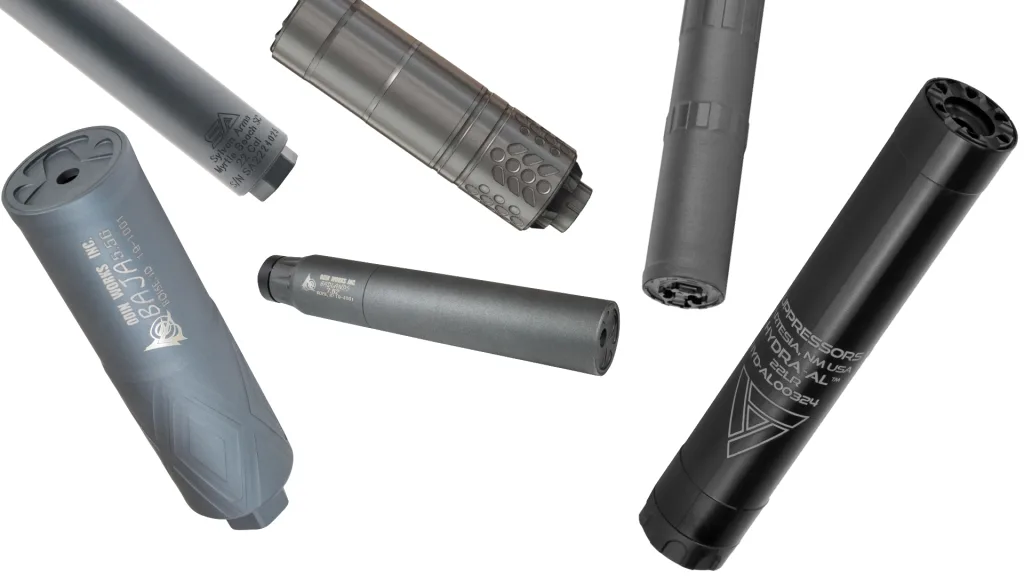
When you pull the trigger, hot, high‑pressure gas from the burning propellant rushes out of the muzzle and violently mixes with cooler, ambient air in a very short time. That rapid expansion is what drives much of the sound of a gunshot. A suppressor slows that process: it increases the space and time over which the gas gets released. Baffles and expansion chambers cool and redirect the gas so the pressure spike is lower and the sound is reduced. Silencer Shop+2Wikipedia+2
This is why internal geometry and total internal volume matter for suppressor performance — more than sheer length alone.
Main suppressor types — what each does best
Here’s a breakdown of the major types of suppressors and what they’re optimised for:
Rimfire (.22 LR / .17)
- Why use one: Rimfire rounds are often subsonic, making them easier to suppress. A smaller, well‑designed suppressor can be very effective.
- Maintenance note: Rimfires foul quickly — lead and carbon build up fast — so many models are user‑serviceable.
- Tip: If you shoot lots of .22, use a purpose‑built rimfire can rather than a general centre‑fire can.
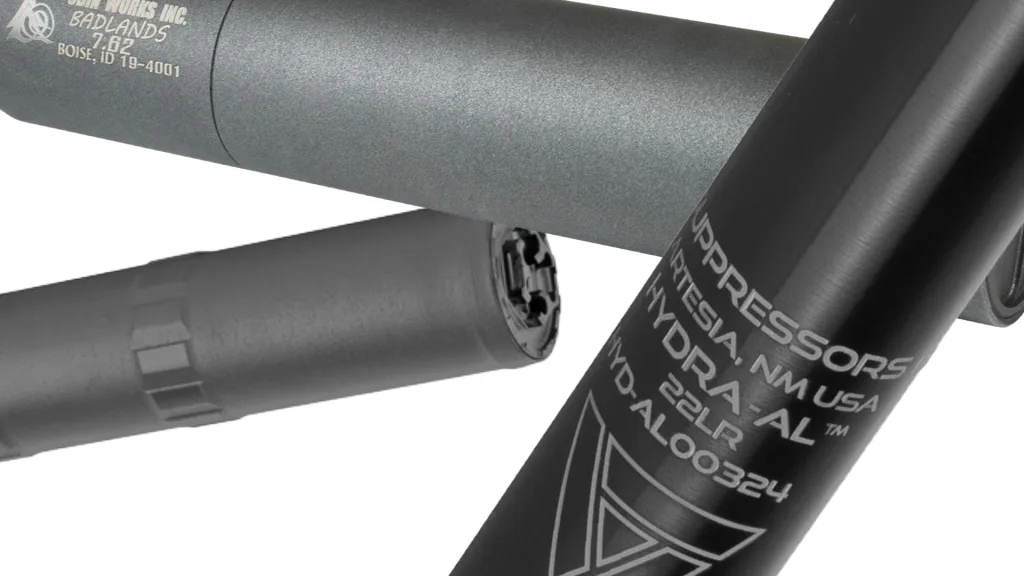
- Example: Hydra Rimfire — designed for regular disassembly and cleaning.
Pistol cans (9mm / .45 / 10mm / larger)
- Why use one: These are compact suppressors matched to the pressure and cycling characteristics of pistols. Many are modular—shorter for carry, longer for range.
- Important compatibility note: On short‑recoil pistols, a heavy suppressor can change the timing of the cycling. A recoil booster (like a Nielsen device) may be required.
- Examples: CGS MOD9, CGS Nautilus 45.
Rifle cans (.223/5.56, .308/7.62, .30‑family)
- Why use one: Rifle calibres generate a lot more high‑velocity gas and heat; you need a larger internal volume and tougher materials to tame that. A suppressor rated for .30‑cal will cover a wide variety of rifles (with the correct mount/adapters).
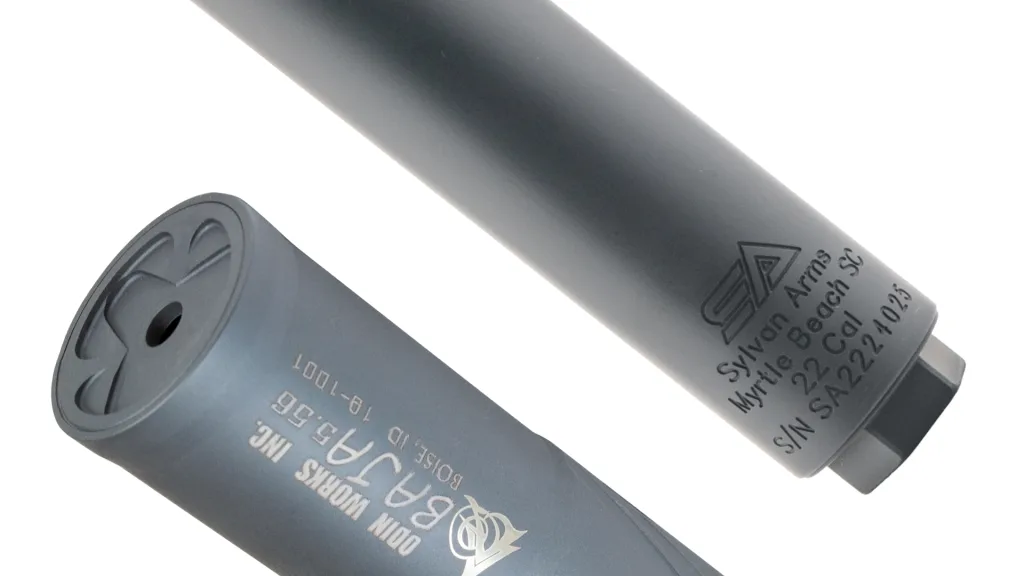
- Examples: OdinWorks Baja 5.56 (DT), Badlands 7.62 (QD), Sylvan Arms SA223TI / SA30TI, Texas Silencers Outrider Titanium.
Big‑bore / magnum cans
- Why use one: These are built for very high chamber pressures, large gas volumes, and high erosion risk. They tend to be heavier, specialised devices, optimised for calibres like .338, .45‑70, .50 BMG etc.
Flow‑through / reduced back‑pressure designs
- Why use one: These designs intentionally route gas in ways to reduce blow‑back and optic fouling, sacrificing some sound attenuation. They’re useful for high‑volume shooting, competition settings, or when protecting optics is a big priority.
Materials — trade‑offs you’ll see in real life
When you shop for a suppressor, materials matter. Here are the common ones and what they offer:
- Inconel / high‑nickel alloys: Excellent for erosion resistance and heat tolerance. Often used in heavy rifle cans, especially for blast baffles. They are heavy, expensive — but very durable.
- Stainless steel: Durable and relatively affordable; a solid all‑round choice. Heavier than titanium however.
- Titanium: Excellent for strength‑to‑weight ratio and corrosion resistance — ideal for hunting rigs or carry rifles where weight matters. But under very heavy fire, it will soak heat faster than Inconel.
- Aluminium: Extremely light and inexpensive, well suited for rimfire and many pistol cans. But aluminium is not ideal as the primary material for sustained, hot centre‑fire use — unless paired with hardened internal blast components.
Ratings, limits, and the barrel‑length restriction you need
There are two practical categories of limits you’ll want to understand:
Manufacturer operational limits
Brands often publish recommended maximum round counts, cooling intervals, and warnings such as “not for magnum use” or “do not exceed X rounds in Y seconds.” These guidelines exist for safety, to protect both the suppressor and the host firearm, and for warranty reasons.
Barrel‑length restrictions (very important)
Some suppressors are validated only for barrels of a minimum length. Why? Because a shorter barrel often means the powder is still burning as the bullet leaves the muzzle, so the gas entering the suppressor is hotter, more energetic, and can accelerate baffle erosion or exceed design thermal limits. For example, a manufacturer may say “for barrels 10″ or longer only” or “not for barrels shorter than 12″.” Always check this before mounting a suppressor on a short‑barrel rifle, PCC, or SBR.
The Nielsen (recoil) booster — why pistols sometimes need it
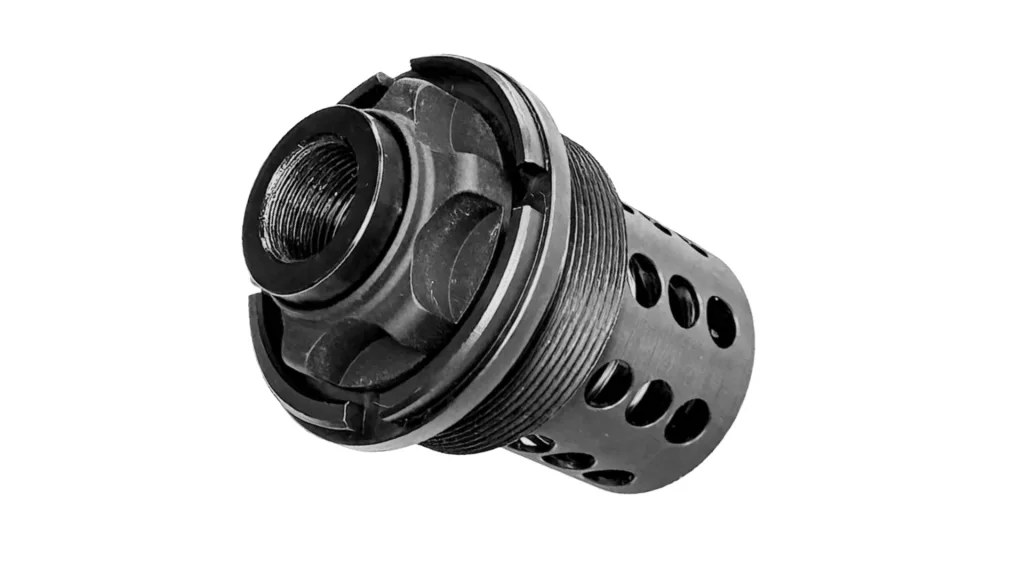
When you suppress a short‑recoil semiautomatic pistol (most modern centerfire pistols), the heavy suppressor screwed to the muzzle adds mass, which can disrupt the precisely‑timed barrel‑slide movement required for the pistol to cycle reliably. A Nielsen device (or recoil booster) is a small mechanical adapter placed between the barrel and the suppressor. It decouples the suppressor’s mass during the initial recoil impulse, then returns that energy so the slide cycles normally. Without it, you risk malfunctions on many short‑recoil pistols.
Cleaning and maintenance — what to expect by type
- Rimfire: Frequent cleaning required. A rimfire suppressor can foul so badly in a few hundred rounds that performance is reduced. Choose a user‑serviceable design if you shoot a lot of rimfire.
- Pistol cans: These vary widely. Some are designed for user‑serviceable disassembly, others are sealed. Blow‑back into the action from suppressed pistols increases maintenance needs on carrier guns.
- Rifle cans: Many modern rifle suppressors are built for long counts and low maintenance, but they still require inspection and may need service after heavy use. If you’re using one for training or duty, pick one with durable materials, easy service options, and follow manufacturer teardown guidance.
A practical strategy for your first suppressor
Here’s how I’d approach buying your first suppressor (based on my experience and what many shooters recommend):
- If your primary use is rifle: start with a .30‑cal rated rifle suppressor that has no barrel‑length restrictions for maximum versatility. That way you cover a lot of platforms with one can and reduce the need to buy several.
- If your primary use is pistol: buy a suppressor sized for the largest pistol caliber you intend to run (for example, get a .45 can if you plan to suppress both .45 and 9mm). Don’t forget to check if a Nielsen device is required for your pistol.
- If you shoot lots of .22LR rimfire: get a dedicated rimfire suppressor that’s user‑serviceable (cleanable). Don’t rely on a general centre‑fire can for heavy rimfire use — fouling and lead accumulation degrade performance quickly.
- If you want one can to cover most rifle needs: a sturdy, serviceable .30‑cal can is the most flexible first can.
Quick technical checklist (use before mounting or buying)
- Confirm thread/mount compatibility (direct‑thread, QD system, KeyMount/ASR etc.).
- Verify material and full‑auto / magnum ratings if applicable.
- Check manufacturer barrel‑length restrictions and round‑count guidance.
- If mounting on a short‑recoil pistol: check whether a Nielsen/recoil booster is required.
- Plan for maintenance (cleaning gear for rimfire cans, inspection schedule for centre‑fire cans).
Final takeaways (plain and simple)
- Suppressors reduce muzzle blast and help protect hearing, but they don’t remove the sonic crack made by a supersonic bullet.
- Choose your suppressor by host firearm and intended use. For rifles, a .30‑cal rated can is usually the most flexible first pick; for rimfire, use a purpose‑built rimfire can; for pistols, pick a can sized for your largest pistol caliber.
- Pay attention to material, ratings, and the manufacturer’s barrel‑length limits — a “10″+ barrel only” spec is a real operational constraint on some models.
- On short‑recoil pistols, a Nielsen/recoil booster may be essential when adding a suppressor.
- Maintenance matters: rimfire suppressors often need frequent disassembly; centre‑fire cans vary from near maintenance‑free to user‑serviceable depending on design.