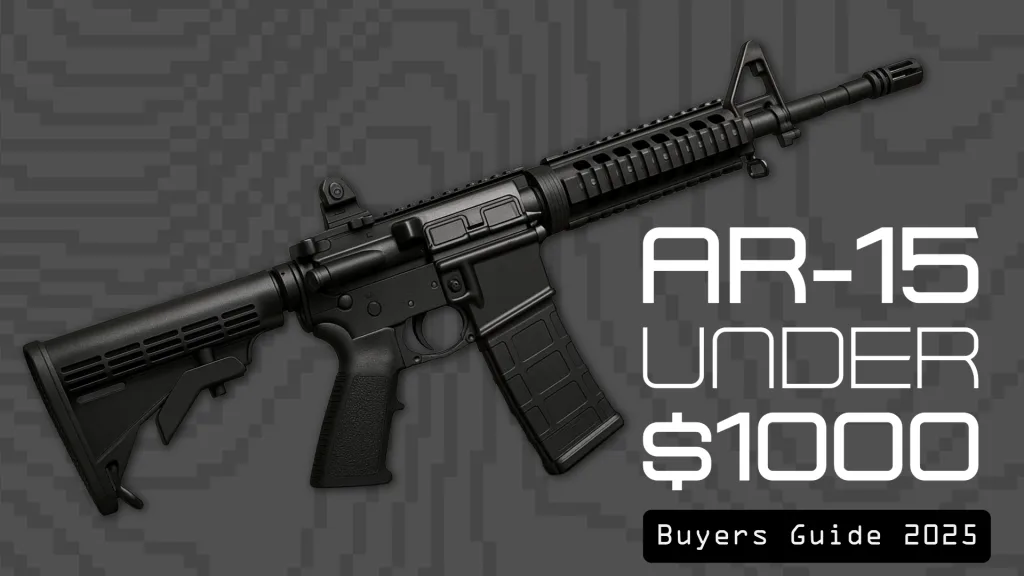
You’re looking for the Best AR-15 under $1000 that won’t break the bank with upgrades and accessories? Having spent more than two decades on the range, I know you can find the sweet spot between cost and quality. Plenty of budget‑friendly AR‑15s (under $1000) deliver reliable, mil‑spec performance. At the same time, lots of too‑good‑to‑be‑true rifles lurk out there. If you go with a no‑name rifle that cuts corners, you risk turning your range day into a frustrating experience.
In this article I’ll highlight reputable AR‑15 brands such as Palmetto State Armory, DPMS, Radical Firearms and more. I’ll discuss common pitfalls of bargain‑bin ARs, and cover which parts genuinely deserve investment (and which accessories you can safely skip when you’re starting out). Let’s dive in!
Top Budget AR‑15 Brands and Models (Under $1000)
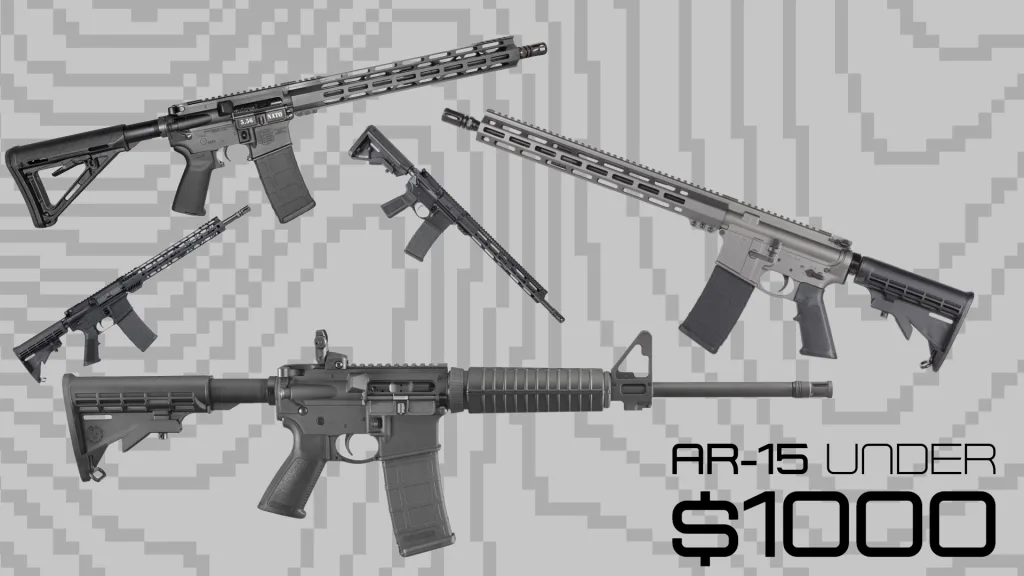
Not all affordable AR‑15s are junk. Several manufacturers offer excellent complete mil‑spec rifles in the sub‑$1000 price range. From my experience, these are some top picks:
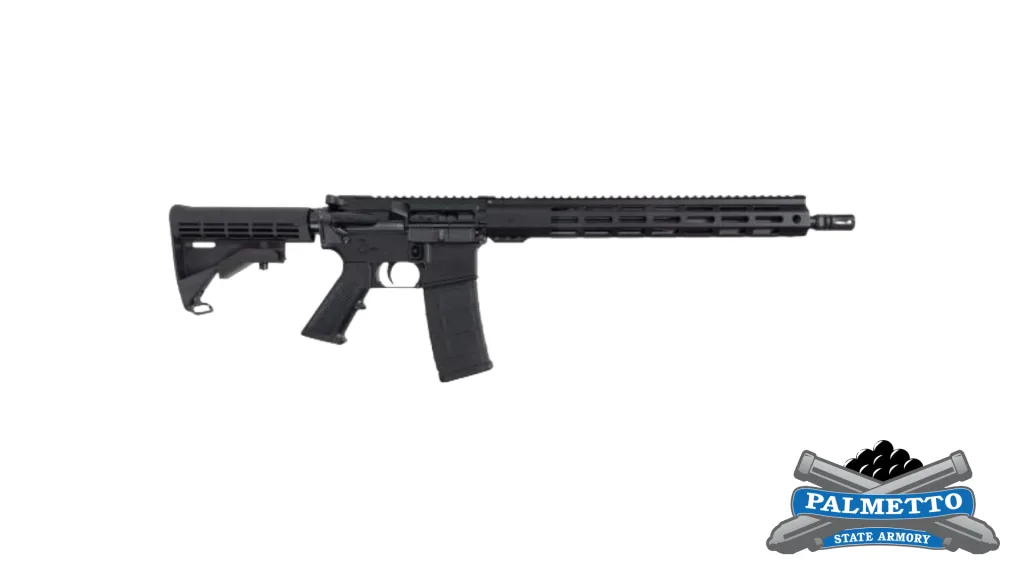
Palmetto State Armory (PSA) PA‑15
Palmetto State Armory has built a solid reputation for delivering AR‑15s at very wallet‑friendly prices. Their in‑house build process and wide configuration options make them stand out. For example, you can often find a 16″ 5.56 NATO PSA rifle for around $500 (or less during sales). These rifles use true mil‑spec parts – forged 7075 receivers, 5.56 NATO chambers – and are ideal for new shooters. The trade‑off? You might spot a cosmetic blemish here or basic furniture there, but functionally they run great. Over the years I’ve owned several PSAs and they’ve logged thousands of rounds without issue. Bottom line: PSA offers arguably the best bang‑for‑buck AR‑15 on the market. An Official Journal Of The NRA+3Pew Pew Tactical+3Gun Digest+3
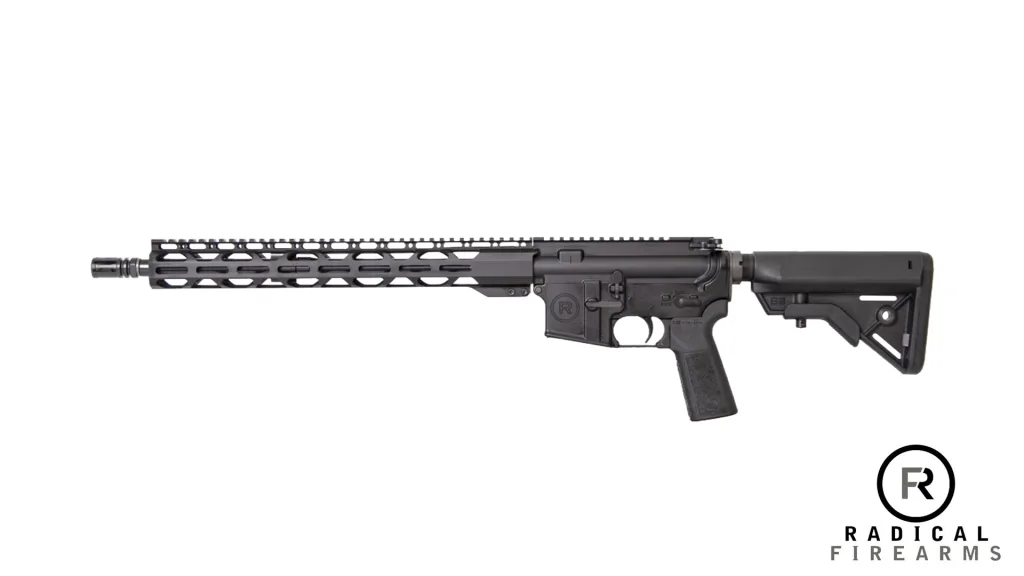
Radical Firearms RF‑15
Radical Firearms, based in Texas, is another budget AR brand that punches above its price class. Their RF‑15 rifles in the $450–$600 range include 16″ 5.56 NATO barrels (often 4140 C M V steel, Melonite treated) and 7075‑T6 aluminum receivers. While 4140 steel isn’t the absolute top tier (4150 is stronger), for most shooters it’s more than adequate. In testing the Radical proved as reliable and accurate as higher‑end rifles — one reviewer noted zero malfunctions and the ability to hit 6″ steel gongs at 100 yards with iron sights. They even include quality bolt carrier groups and back their products with lifetime warranties. For a rifle that “goes bang every time” without the premium price tag, Radical Firearms is a fantastic choice for new AR owners. Pew Pew Tactical+1
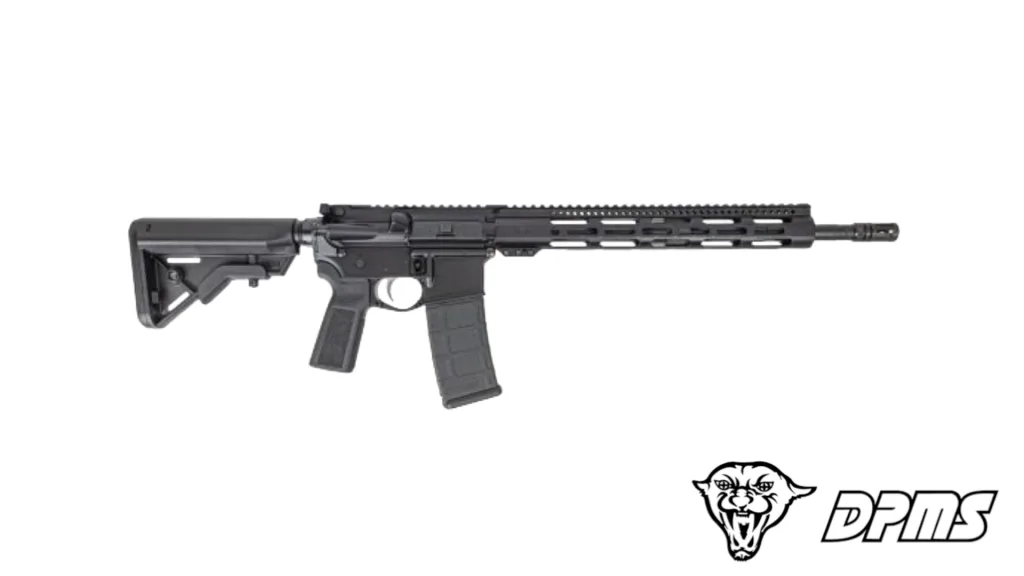
DPMS Panther Arms (Oracle Series)
DPMS brings a long heritage in the AR world. The Oracle (sometimes Oracle II) 16″ carbine, often priced around $500‑$600, delivers good value. It’s a straightforward M4‑style rifle with a standard Picatinny rail and A2 flash hider. Owners generally report solid build quality and reliable performance – provided you maintain it. Issues are rare and customer service is responsive when something crops up. This no‑frills workhorse will outperform many off‑brand budget rifles and makes a solid training or range gun. The Oracle offers mil‑spec build quality (properly staked gas keys, etc.) from a trusted brand — a great option if you want an affordable AR‑that‑works. Minuteman Times+1
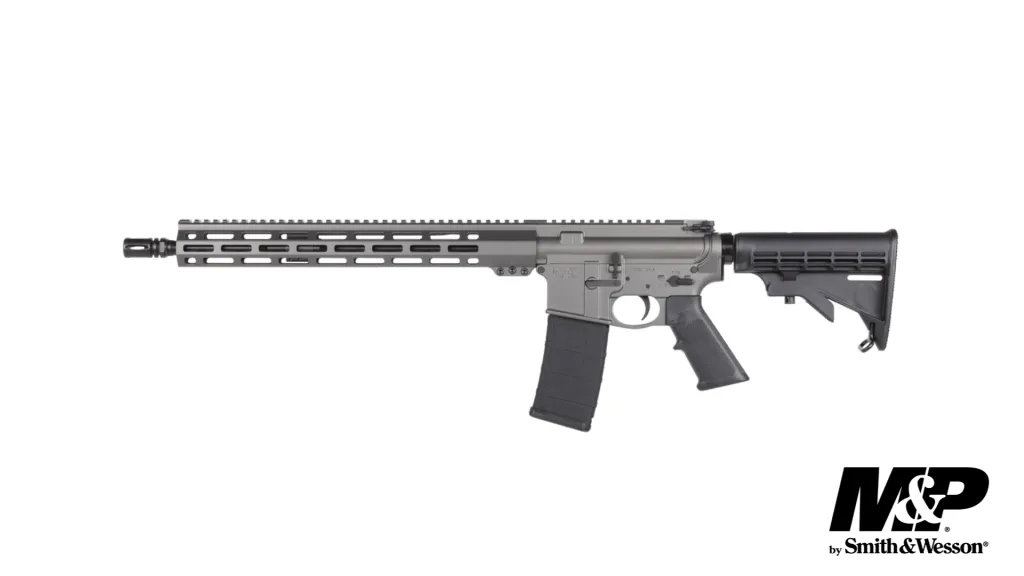
Smith & Wesson M&P15 Sport II
If you prefer a big‑name manufacturer, the Smith & Wesson M&P15 Sport II is extremely popular among first‑time AR buyers, usually priced around $700‑$800. S&W brings decades of quality firearm manufacturing. The Sport II features a 16″ 5.56 NATO rifle built to mil‑spec standards (7075 receivers, chrome‑lined gas key and bolt carrier) and is known for out‑of‑box reliability. One major plus: S&W backs this rifle with a lifetime service policy, which is rare in this price class. While it doesn’t have all the boutique features, it’s ready to shoot straight out of the box and is well suited for plinking, training, or home defense. www.catoutdoors.com+1
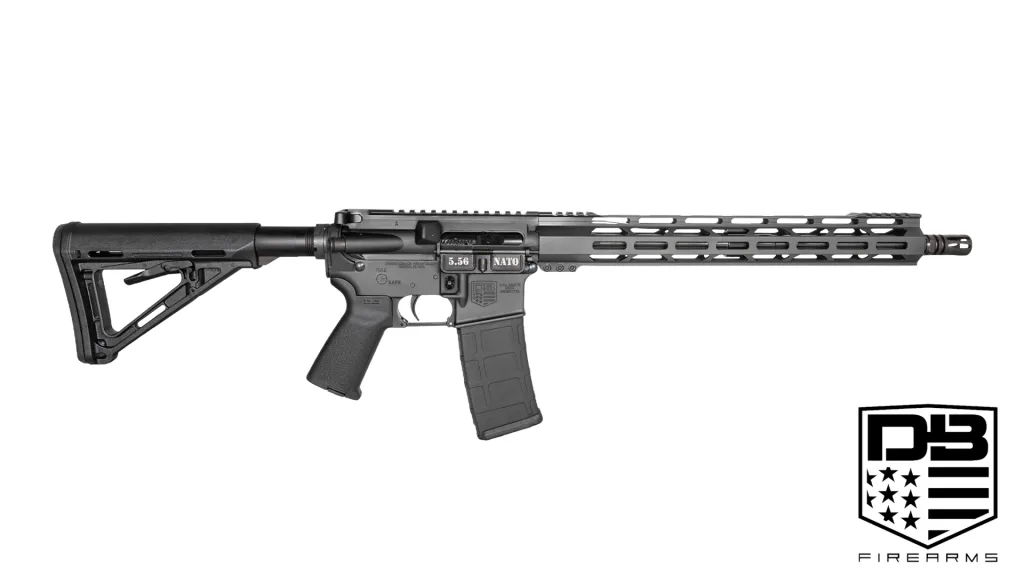
Diamondback Firearms DB15
Diamondback has stepped up their game noticeably in recent years. Their DB15 rifles (around $600‑$800) offer features you usually see on higher‑end guns — for example, 4150 Chrome‑Moly Vanadium barrels with nitride finish for longevity, bolt carrier groups that are shot‑peened and MPI (Magnetic Particle Inspected) – a level of quality control many budget brands skip. One rifle I used for over a year ran flawlessly with zero malfunctions. A friend even found a DB15 package with two complete uppers (one 5.56 and one .300 BLK) under $1000 total — pretty hard to beat. With mid‑tier refinements and an average price around $700, Diamondback rifles are excellent value. They prove you can get a high‑quality, fully mil‑spec AR without exceeding the $1000 mark.
These are just a few examples — other honorable mentions in the sub‑$1K territory include the Springfield SAINT series, Aero Precision AC‑15/M4E1 rifles, Bushmaster XM‑15, and Anderson AM‑15. The key: stick with reputable brands with good warranties and quality control. Do that and you absolutely can find an AR‑15 that’s both affordable and dependable. As one guide put it: there are plenty of decent rifles at good prices — you just have to choose one that keeps “quality up” while keeping “the price tag down.” Pew Pew Tactical+1
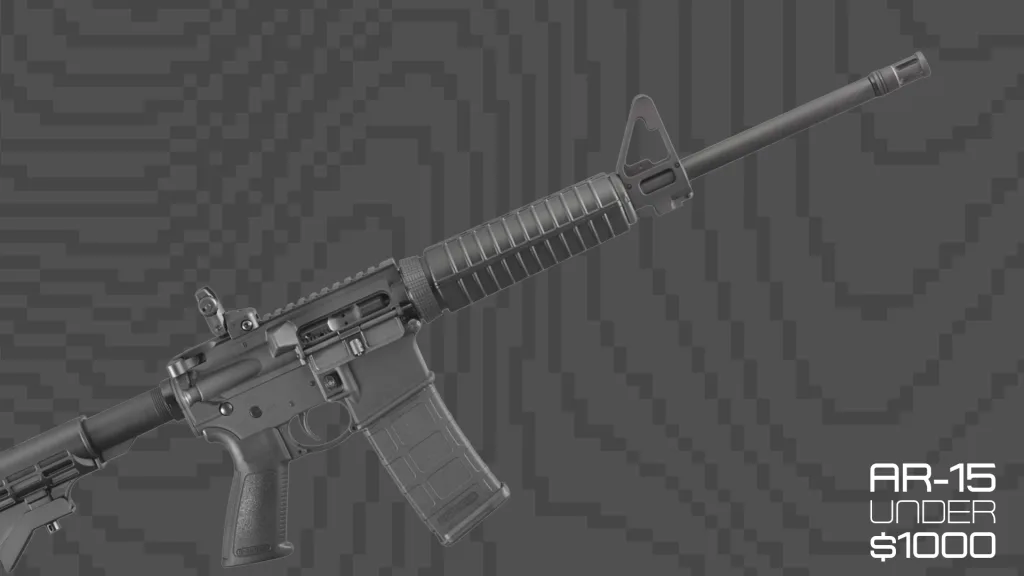
Pitfalls of No‑Name or DIY‑Assembled AR‑15s
It’s time to address the darker side of budget ARs: the no‑name “gun show special” rifles or mystery parts builds. Over decades on the range I’ve seen folks lured by a $399 AR‑15 built from who‑knows‑what parts — and more often than not, they regret it. Why? Because not every small AR maker is worth your money. Some budget rifles are fine, but too many are poorly machined, unreliable clunkers that won’t make it through a full magazine without jamming. Reddit+1 The challenge: a new buyer often cannot tell the difference at a glance.
Here are some common pitfalls of ultra‑cheap, non‑reputable ARs:
Out‑of‑Spec Parts: The AR‑15 is modular, but it only works correctly if everything is made to spec. Many fly‑by‑night companies cut corners in machining. I’ve seen off‑brand receivers so poorly milled that you could see a quarter‑inch gap between the upper and lower when pinned — a major red flag. That kind of slack in fit can lead to erratic feeding and reliability issues. If you spot an AR with obvious fit & finish problems (misaligned uppers, wobbling stocks, etc.), walk away.
Inferior Metal Quality: Budget builders sometimes use cheaper alloys or weaker materials for critical parts. Common issues: bolts or bolt carriers made from sub‑par steel that isn’t heat‑treated properly, so they crack or wear prematurely. Barrels made of unidentified steel (or with improper hardening) may have short service lives or poor accuracy. A reputable budget brand will at least disclose if the barrel is 4140 or 4150 steel; a sketchy brand might not disclose anything (which is a major warning). Everyday Marksman
Lack of Quality Control: Established manufacturers have testing protocols — they test‑fire guns, inspect components, fix issues before shipping. Many ultra‑cheap outfits skip this to save cost. The result: you become the beta‑tester for their product. It’s no fun discovering your gas block wasn’t tightened or your trigger pins walk out after twenty shots because the factory skipped staking. I’ve seen loose gas keys, unstaked castle nuts, canted sights — all common on cheap ARs lacking proper oversight.
No Warranty or Support: That bargain‑basement AR likely doesn’t come with a robust warranty (or any). Big companies like PSA or Ruger stand behind their guns; if something breaks, they’ll fix it. With an unknown brand you’re often on your own. The cost of replacing broken parts can quickly erase any upfront savings.
In short: “buy nice or buy twice” definitely applies to AR‑15s. That doesn’t mean you must spend a fortune. But you should purchase from a known, vetted source. If a random brand AR is priced way lower than comparable rifles, ask yourself why. They may be cutting corners you can’t easily see. A quality $700 rifle will serve far better than a $500 rifle that jams constantly (or worse, has a catastrophic failure). After decades of shooting: stick to the budget‑friendly brands we trust — they’ve proven that an inexpensive AR can still be reliable and well‑made.
Critical Components You Shouldn’t Skimp On
When buying or building an AR‑15, some parts truly deserve investment. Even on a budget, certain components should be high quality — or you’ll pay later in headaches. Here are the parts you should never cheap out on, and why:
Barrel: The barrel is the heart of your AR’s accuracy and longevity. Cheap rifles often use lower‑grade barrels that may not be durable. Ideally look for 4150 CMV steel or better, which handles heat and wear well. A 4150 barrel (especially chrome‑lined or nitride treated) can handle 20,000+ rounds; a 4140 barrel might be good for ~12,000 rounds. Now, 4140 isn’t “bad” — many budget ARs use it and perform fine — but in general stronger steel equals longer life. Also important: a proper chamber (5.56 NATO or .223 Wylde for versatility) and a good twist rate (1:7 to 1:9 for typical .223/5.56 uses). A high‑quality barrel ensures your rifle will shoot accurately and hold up long term.
Bolt Carrier Group (BCG): The BCG is the engine of your AR‑15. This isn’t a part to buy from the lowest bidder. A good BCG should have correct steel (e.g., Carpenter 158 or 9310 for the bolt), properly staked gas key, and ideally be HP (High Pressure) and MPI (Magnetic Particle Inspected) tested — to detect hidden defects. Many budget manufacturers skip MPI to cut cost. For example, Diamondback stands out because they do MPI test their BCGs, giving extra peace of mind. A cheap, soft bolt can crack at the cam pin or lugs, turning your rifle into a paperweight. I always tell new builders: if you only upgrade one thing, make it a good BCG from a known maker. It’s literally the part that keeps your rifle running, so don’t skimp.
Fire‑Control Group (Trigger): While a standard mil‑spec trigger is perfectly serviceable, its quality impacts your shooting experience. Cheap trigger groups can feel gritty, heavy, or prone to light‑primer strikes. You don’t necessarily need a match‑grade trigger as a beginner, but you do want something safe and reliable. Stick with mil‑spec triggers from reputable sources (often included in the rifles listed above). These will provide a consistent ~6‑7 lb pull and proper hardening. Avoid super cheap “enhanced” triggers that may use inferior springs or metal — they might wear out or malfunction (bump fires, etc.). You can upgrade later once you know what you want, but out‑of‑box reliability matters now.
Upper & Lower Receivers: Most decent ARs use forged 7075‑T6 aluminum receivers — military‑spec for a reason: strong and proven. Some budget guns might use cast or polymer receivers; while some polymer lowers (like the ATI Omni Hybrid) claim durability, for most new shooters aluminum is safer. Also, a good receiver set fits together snugly (no huge gaps) and has holes drilled to spec. Poor build fit can mean installing parts becomes difficult or accuracy suffers. The good news: the brands I listed above use quality forged receivers. Just beware if you see an AR with unusual receiver materials or obvious fitment issues.
Gas System: The gas system (gas block and gas tube) is another area where cheap rifles often falter. You want a securely mounted gas block — preferably pinned, or at least with properly tightened set screws — so it won’t shift and cut off your gas supply mid‑magazine. I’ve seen budget builds where the gas block worked loose, essentially turning the rifle into a single‑shot. Also ensure the gas key on the BCG is staked (so screws can’t back out) — most quality manufacturers do this (for example, Bushmaster stakes their castle nuts and gas keys even on entry models). If you go super cheap, you might find they skipped staking, which can lead to malfunctions after a few rounds. In short: a reliable AR needs a solid gas path — verify your rifle’s gas block and key are done right.
In summary: spend your money where it counts — the barrel, BCG, and other core components that affect safety and function. That’s exactly what the reputable budget brands do: they might save cost with simpler furniture or finish, but they do not compromise on the life‑or‑death parts. As an experienced shooter, I’d much rather own a plain‑looking rifle that runs perfectly, than a flashy cheap gun with a fancy handguard that jams every magazine. Focus on the foundation; you can upgrade accessories later.
Accessories You Can Skip (When Starting Out) for the Best AR-15 under $1000
One of the fun (and perilous) parts of owning an AR‑15 is the endless array of accessories and tactical add‑ons. It’s easy to get carried away decking out your rifle with gadgets. But if you’re starting out with a basic range rifle, you don’t need a ton of extras on day one. In fact, I strongly recommend keeping your rifle fairly stock at first, and investing in ammo and practice instead of heavy accessories. As the old saying goes: “mission drives gear” — figure out what you actually need by shooting, rather than bolting on every accessory under the sun.
A plain‑Jane AR‑15 with iron sights (or a basic optic) will handle pretty much anything from close‑quarters drills to mid‑range shooting. Fancy parts might fine‑tune performance at the edges, but real marksmanship skill matters more — especially when you’re beginning.
With that in mind, here are some accessories you can safely skip or postpone when you’re getting started:
- High‑Magnification Scopes: Unless you specifically plan to shoot long distances right away, you don’t need a 1‑8× or 3‑9× magnified scope on a basic 16″ AR. For general range use (50‑200 yards) factory iron sights or an affordable red‑dot will serve you better. Learning on irons or a red‑dot helps you build fundamentals (aiming, eye‑relief, etc.). You can add a fancy optic later once you know your rifle’s niche.
- Expensive Match Triggers: Upgrading the trigger can improve accuracy, sure — but the stock mil‑spec trigger is perfectly capable of good accuracy (around 2 MOA in many budget ARs) for now. When starting out, you’re more limited by technique than trigger quality. A $150 drop‑in trigger won’t instantly make you a sharpshooter — that takes practice. Use your mil‑spec trigger initially; it’s also more forgiving. Later you can swap in a lighter trigger once you’ve mastered basics.
- Excessive Rails & Attachments: Lots of rails, M‑LOK slots, foregrips, bipods, lasers, lights — ask yourself: do you really need all that now for punching paper at 100 yards? Probably not. Too many accessories can add weight and imbalance. A forward grip or bipod is useful for certain scenarios (shooting prone or benchrest), but for offhand range work you can skip them. Similarly, laser sights are more for low‑light or tactical use, not necessary for daylight target shooting. Keep your rifle light, simple and handy; you’ll shoot it better.
- Multiple Furniture Upgrades: It’s tempting to swap stocks, grips, handguards immediately. But the standard M4‑style stock and A2 grip that come with most rifles will perform just fine. After you’ve shot for a while, you may decide you want a slimmer free‑float handguard or ergonomic grip — and that’s fine — but there’s no rush. Basic furniture is durable and functional. For example, a two‑piece handguard may not be as modular as fancy rails, but it’s lightweight, easy to hold, and you likely won’t notice a difference at normal distances. Use your rifle in stock form first; you might be surprised how well it works it as is.
- Tactical Lights (for Range Use): A mounting weapon‑light is a must for home defence or night use. But if you’re just shooting on a lit indoor or outdoor range during the day, a rifle light adds bulk you don’t need. By all means buy a good light eventually — they are important for defense — but for daytime target shooting it’s more “tacticool” than practical. Save space and weight for now.
To sum up: avoid the urge to accessorize excessively at the beginning. A standard AR‑15 with mil‑spec furniture and sights can handle almost everything until you specialise. Every accessory you add introduces potential new problems (loose mounts, dead batteries, extra weight) and distracts from developing your shooting skills. My advice: shoot your rifle in a simple configuration for awhile, while learning what you actually need. You may find that all you really needed was a sling and an optic, and the rest could wait. That will save money and make you a better shooter in the long run.
Conclusion Best AR-15 under $1000
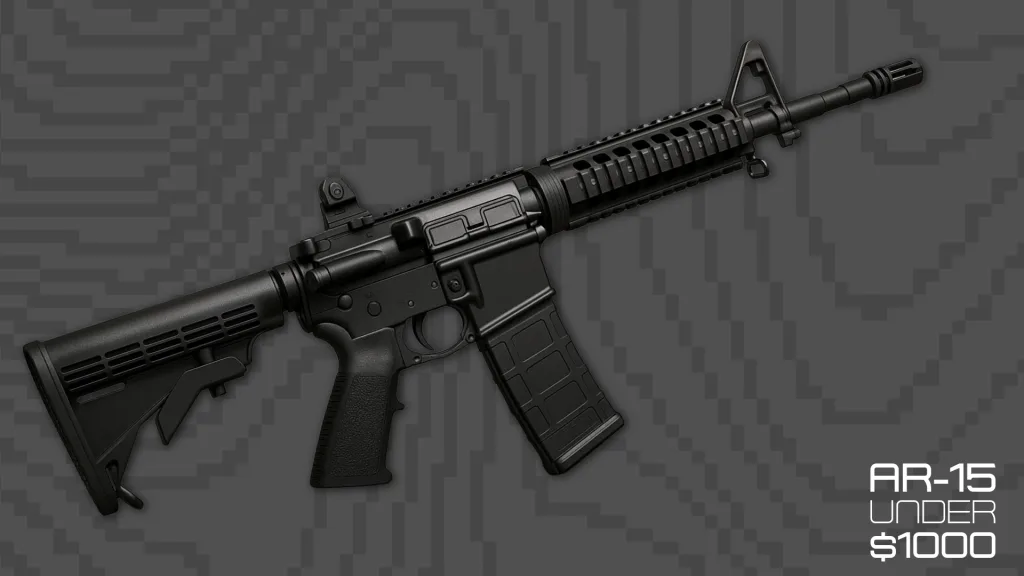
Buying an AR‑15 under $1000 in the USA has never been more achievable. The market today is full of excellent rifles that won’t empty your wallet. What I’ve learned after decades on the firing line: the keys are choosing a reputable brand and ensuring the rifle has quality where it counts (barrel, bolt, receivers, etc.). Avoid no‑name combos that cut corners; instead pick a proven option from a trusted manufacturer like the ones above. These companies have found that perfect balance of price and quality, giving budget‑conscious shooters a reliable weapon they can count on.
Remember: a basic mil‑spec AR‑15 is an incredibly robust and flexible platform. Once you have a good rifle in hand, focus on training and marksmanship. You can always upgrade parts later as you figure out your preferences. In my experience, I’ve seen shooters with plain $600 ARs outperform those with $2000 setups — because it all comes down to knowing your rifle and practicing hard. So get yourself a solid, affordable AR‑15, avoid the common pitfalls of going too cheap, hit the range, and with the right rifle and mindset you’ll be well on your way to proficiency. Happy shooting — and stay safe!